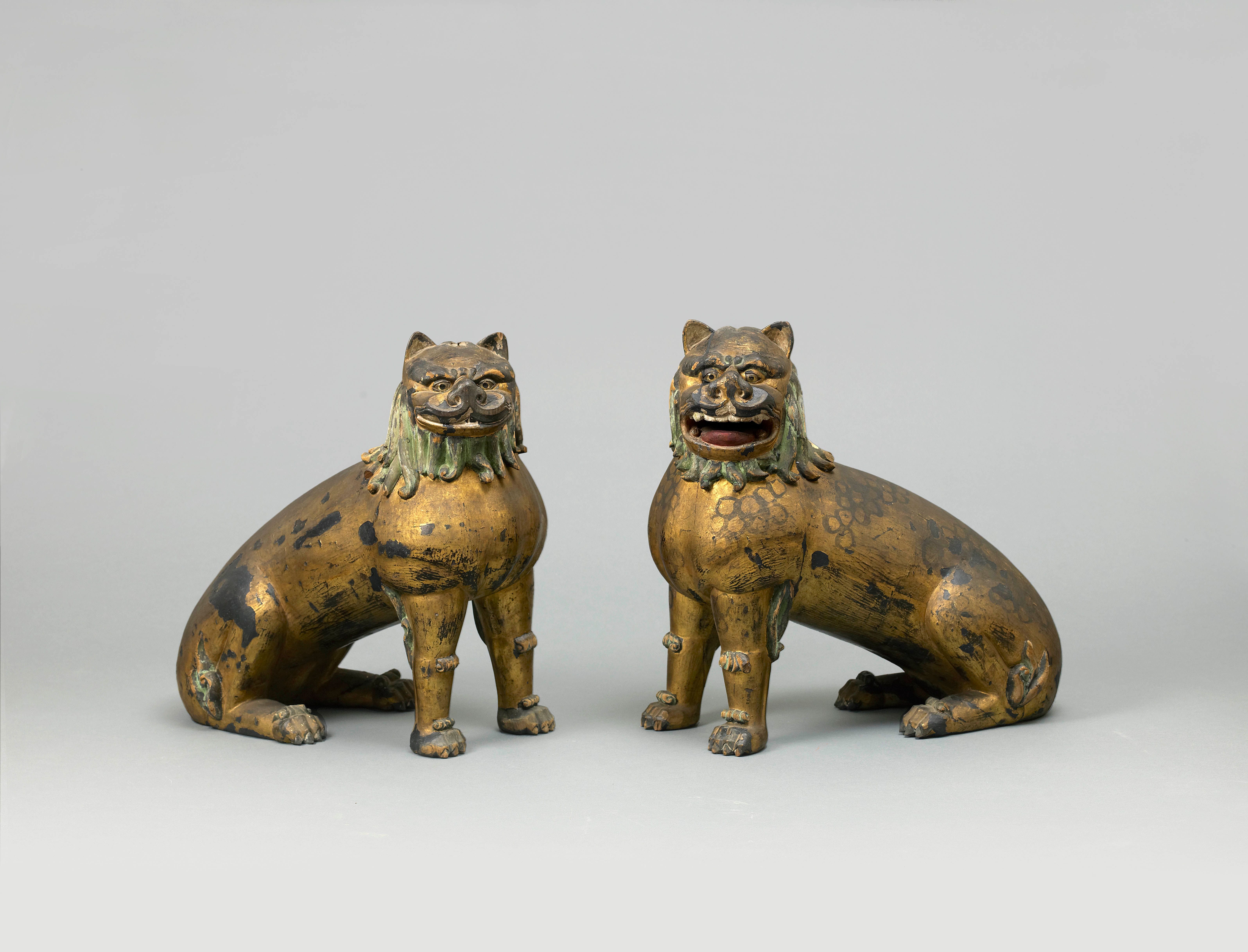
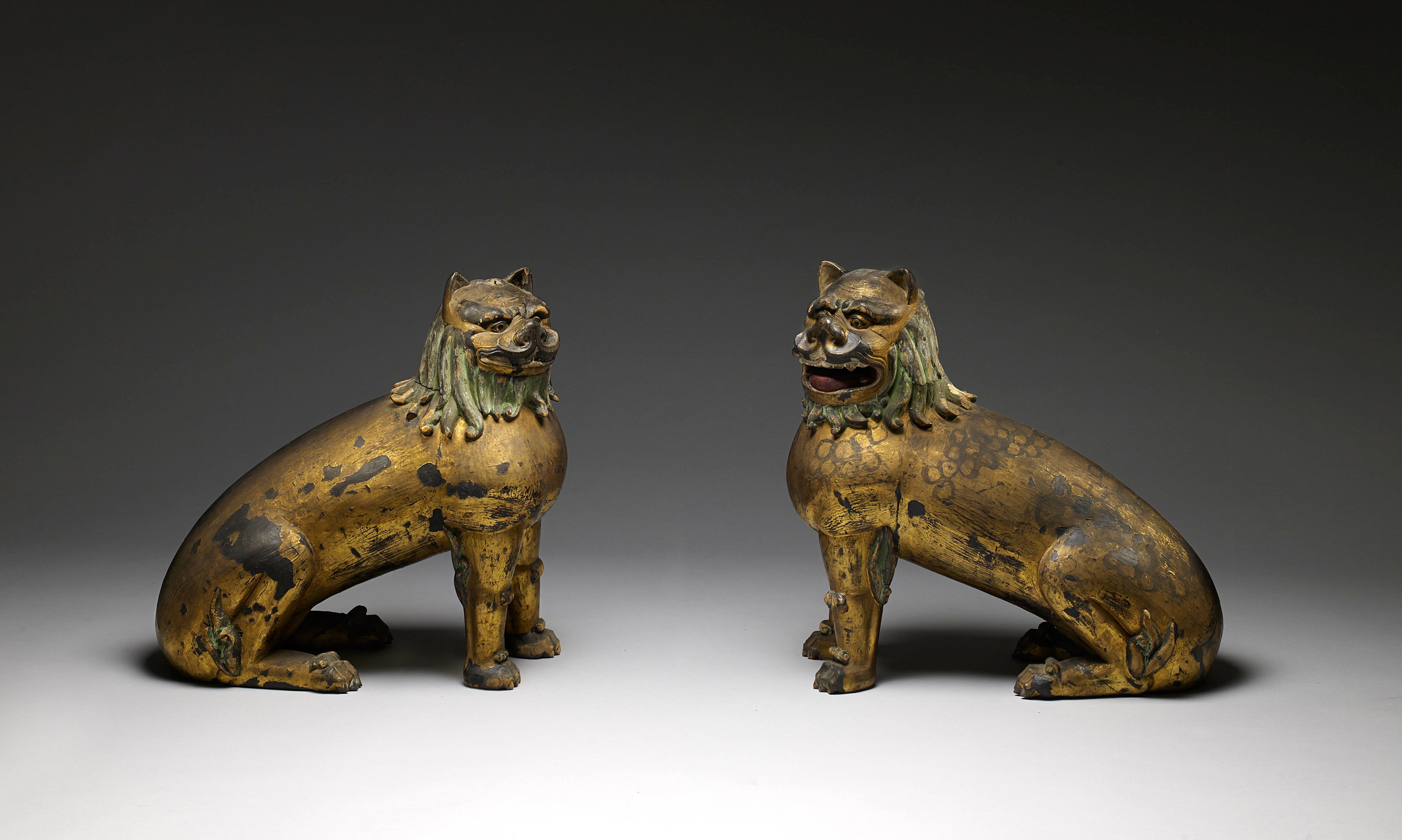
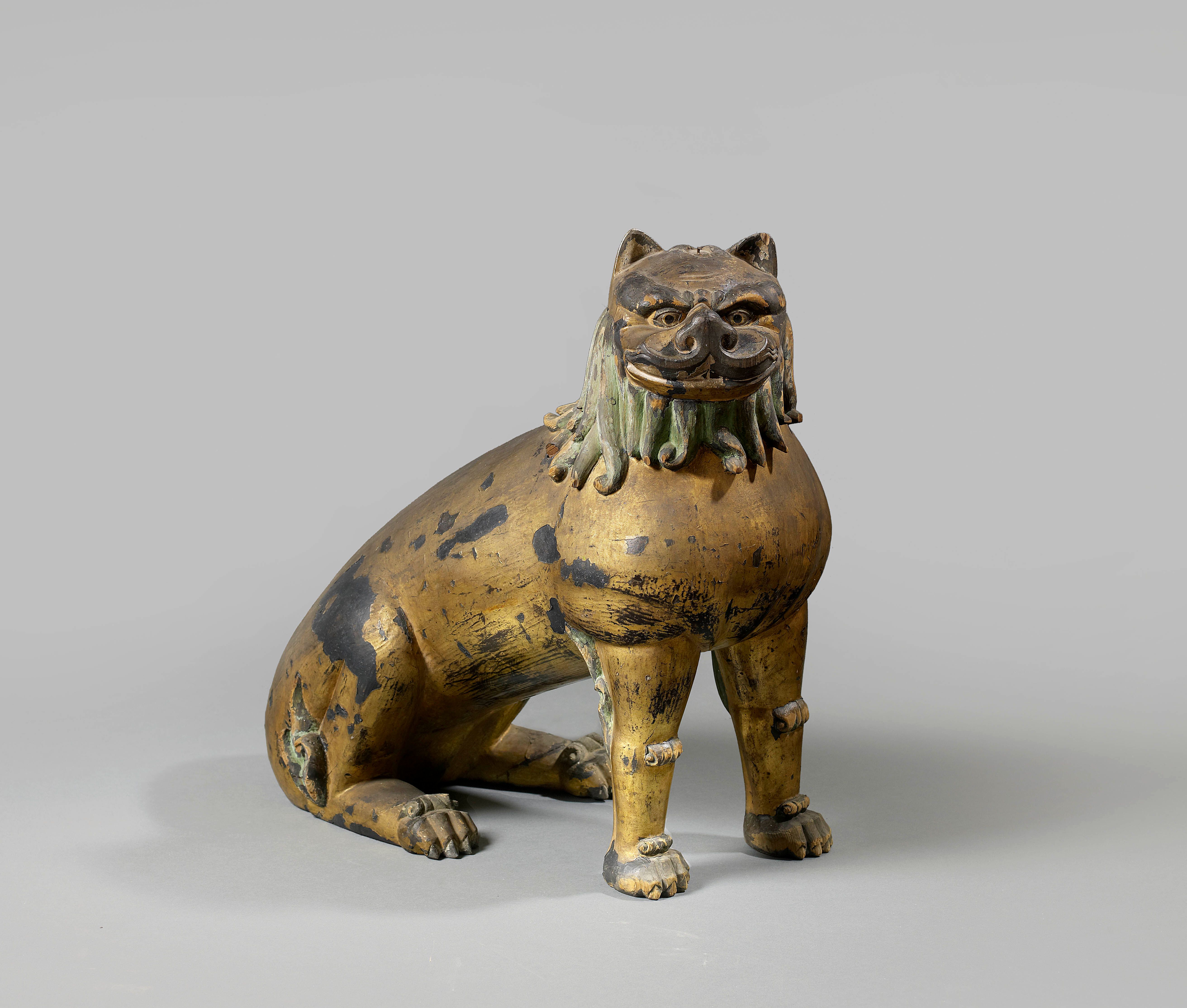
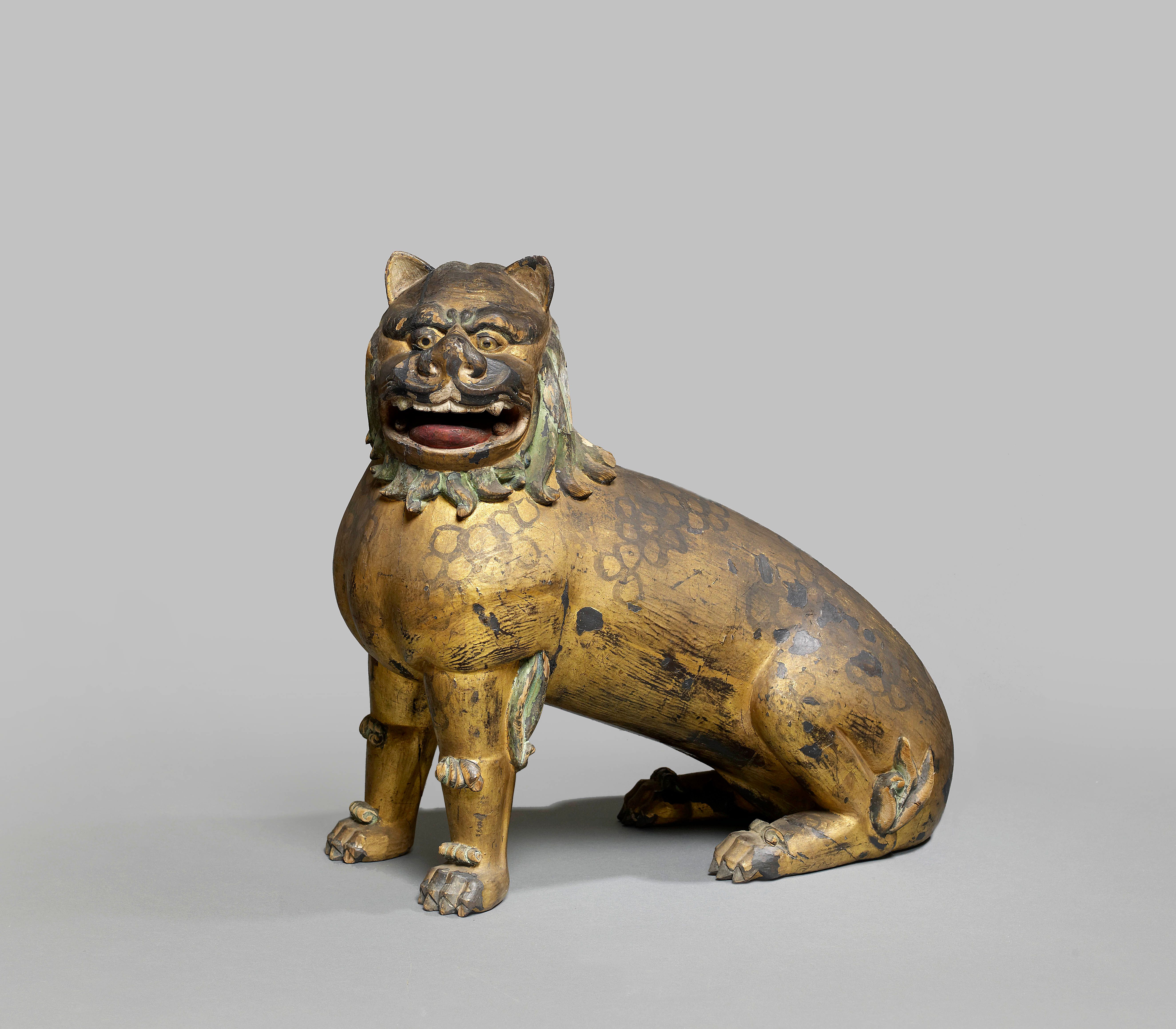
A pair of wood and lacquer komainu (guardian dogs)
Japan, 13th/14th century, Kamakura/Muromachi period.
The literal translation of komainu is “Korean dog”. A pair of lion-like guardian figures which are often placed at each side of a shrine or temple entrance in order to ward off evil spirits. Thought to have been brought to Japan from China via Korea, their name is derived from Koma, the Japanese term for the Korean kingdom of Koguryo.
The lions in stone or bronze relief as temple decorations in the Nara period (710-794) belong to a sculptural tradition that can be traced back to the Buddhist art of India and China. Images of the seated Buddha often include lions at his left and right, both to underscore his majesty and to protect him.
In the early Heian period (9th century) the two guardian statues were clearly differentiated. The figure which stood on the right, komainu, resembled a dog with its mouth open (agyou) and sometimes sported a short horn; the figure on the left, shishi, resembled a lion with its mouth closed (ungyou). Gradually the term komainu came to be used for both statues, and their shapes became indistinguishable except for the open and closed mouths (a-un).
These features were perhaps inspired by niō (two kings), Buddhist guardian figures who are often found at either side of a Buddhist temple gate, whose mouths can also be open or closed. 'A' is the sound of the first letter of the Sanskrit alphabet and is pronounced with the mouth open. 'Un' is the sound of the last letter of the Sanskrit alphabet and is pronounced with the mouth closed. 'A' and 'un' represent the beginning and the end of all things, or inhalation and exhalation, respectively.
For a similar pair of komainu held in the collection of Shirayama Jinja Ishikawa prefecture see: KAMAKURA The Renaissance of Japanese Sculpture 1185-1333, pl.34.
Radio Carbon Dating ref: RCD-8160
Buddhist Art


A kakebotoke


Zenkoji Kannon Bosatsu

Buddhist wood panels

A kakemono with the monk Hōnen

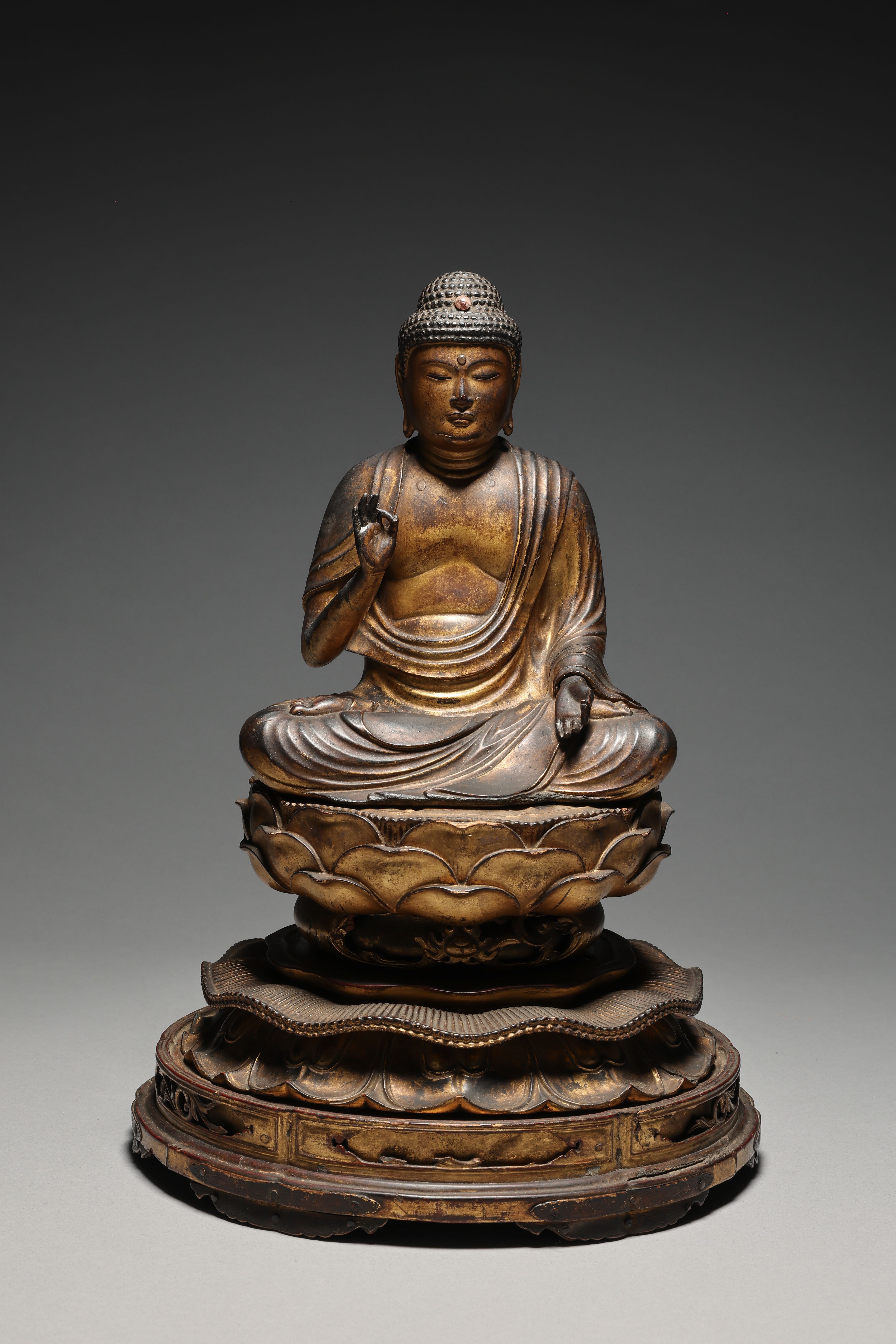
A lacquer and gilt wood figure of a seated Amida Nyorai (Amitābha) dressed in a flowing robe

A wood figure of Amida Nyorai, Heian/Kamakura period

Amida Buddha

Jizō Bosatsu

Amida Buddha

A silk kakemono with Kannon

An iron nyoi

Zushi with Kannon

A bronze kakebotoke of Kannon