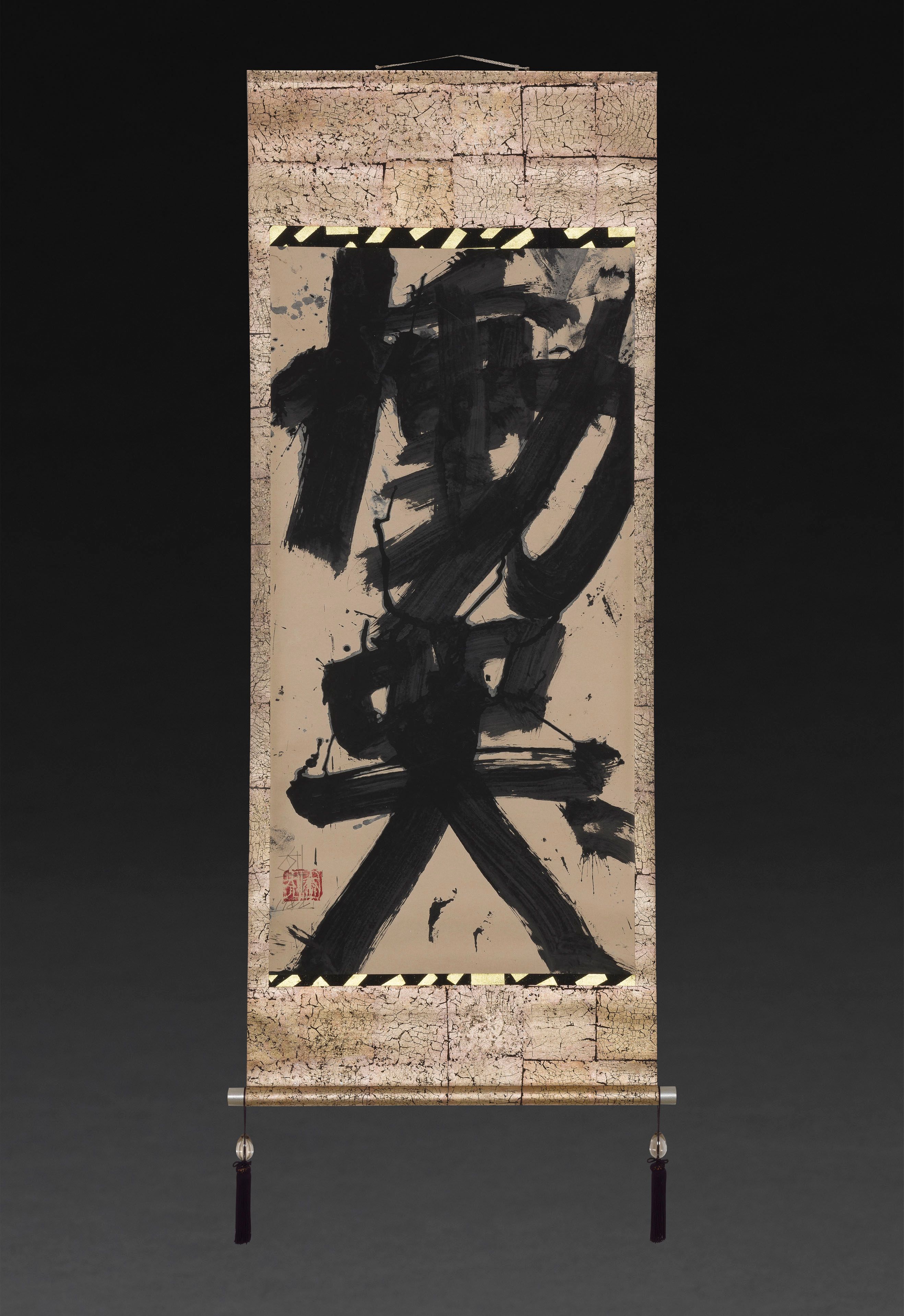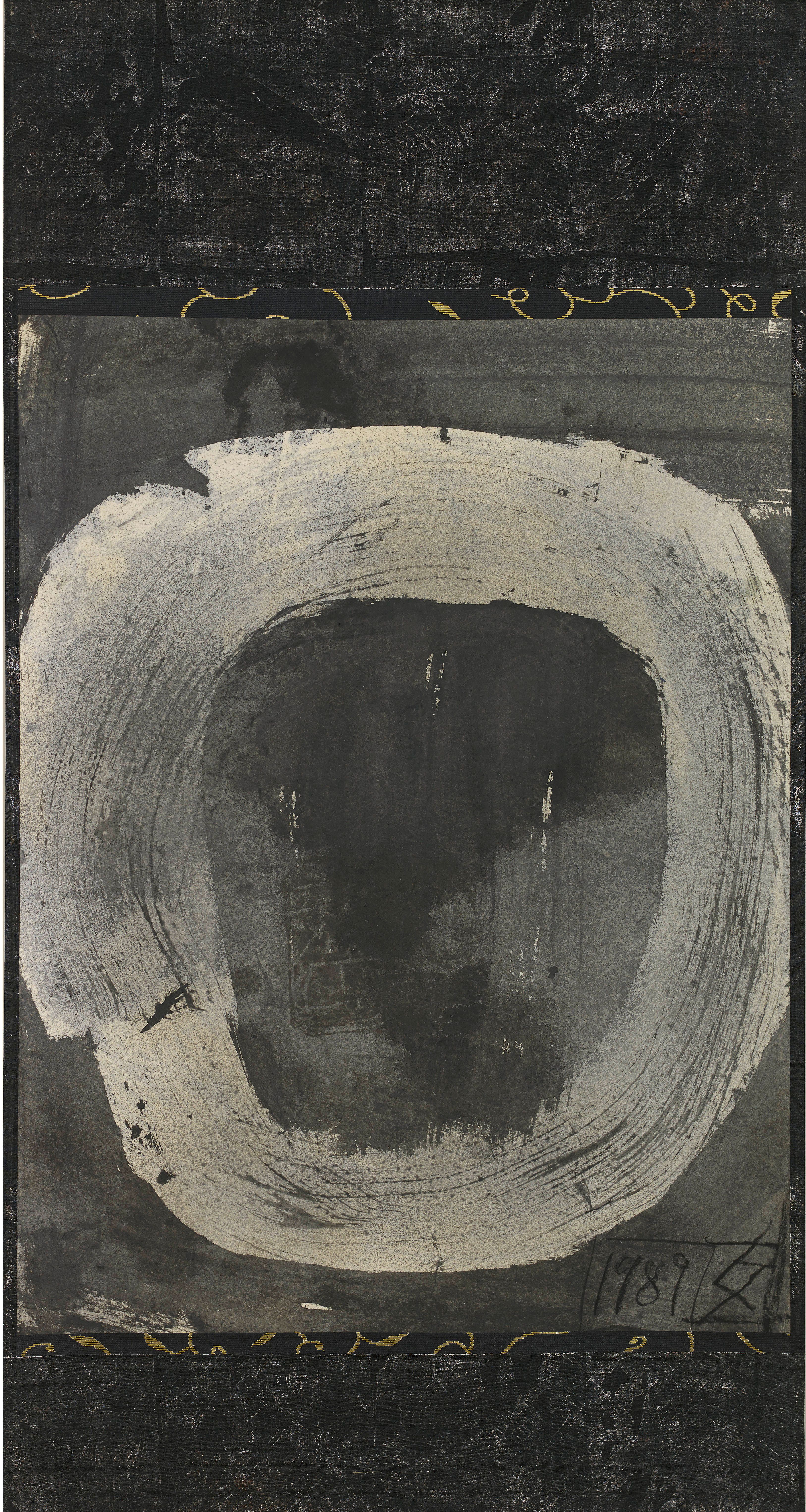


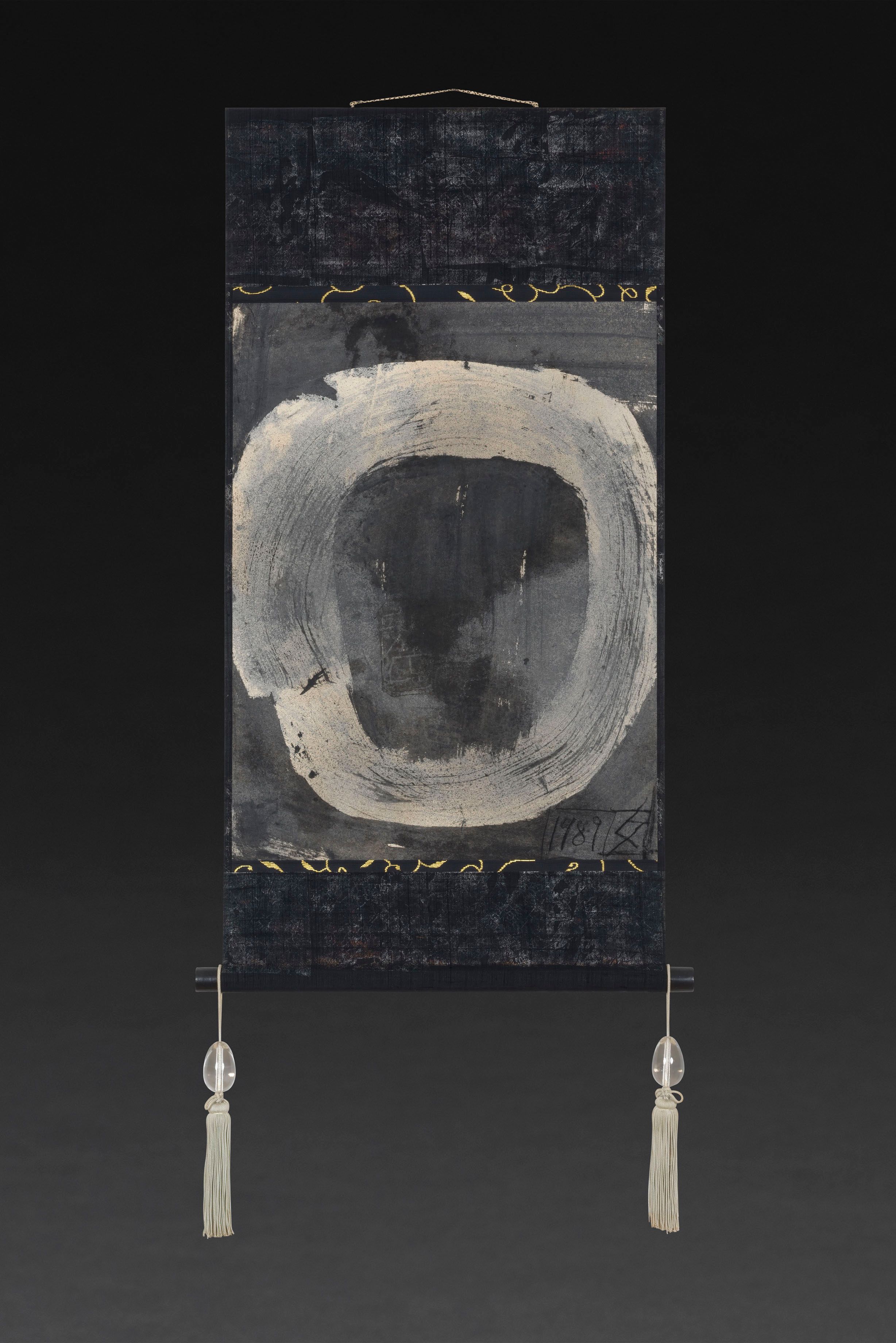
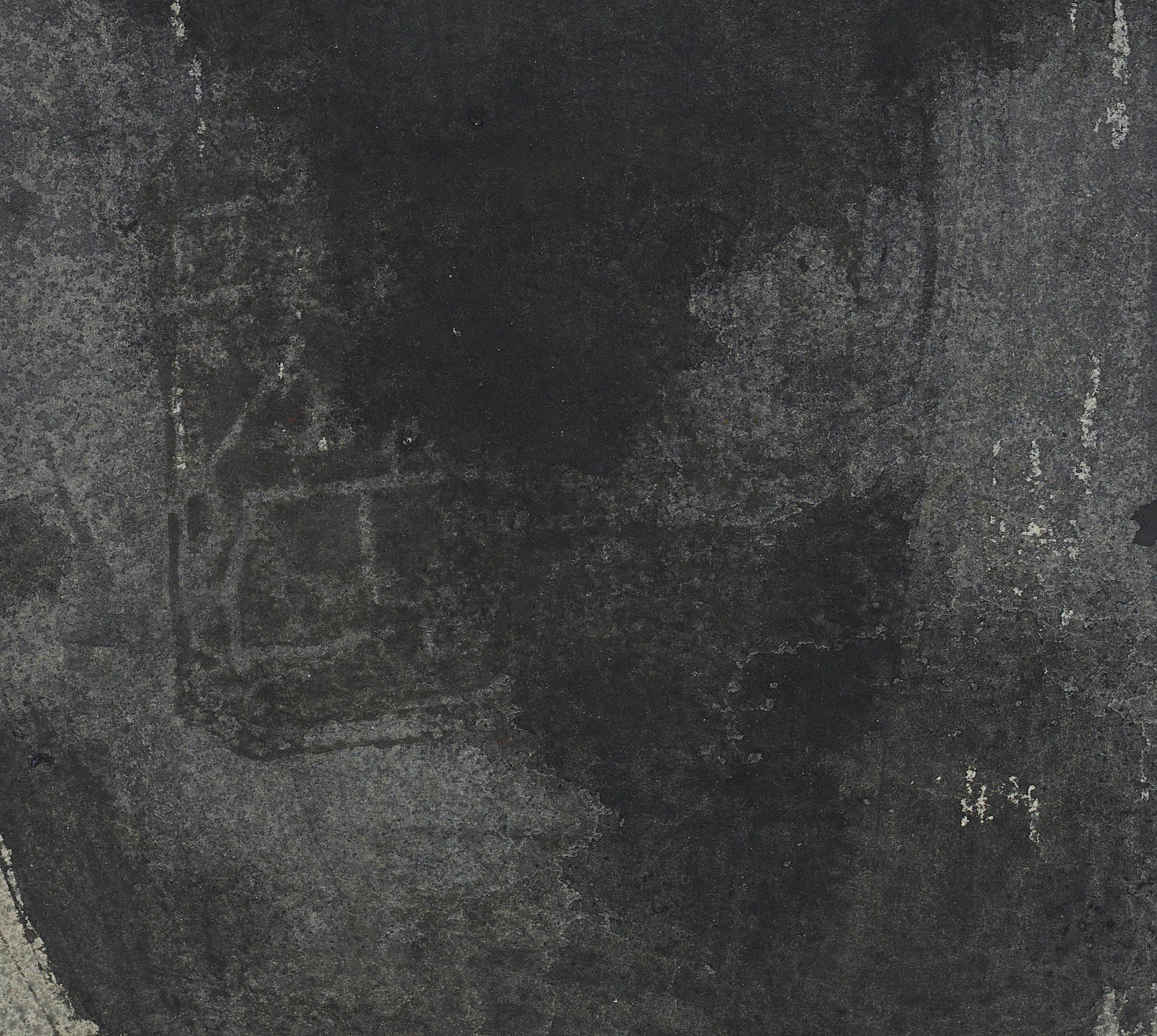
A kakemono (hanging scroll) with ensō (circle) by Suda Kokuta (1906-1990).
Ink and mixed media on paper.
Signed and dated: Koku 1989.
Japan, 20th century Showa period.
Dimensions:
Scroll: H. 95cm x W. 48cm (37½” x 19”)
Painting: H. 60.5cm x W. 46cm (24” x 18¼”)
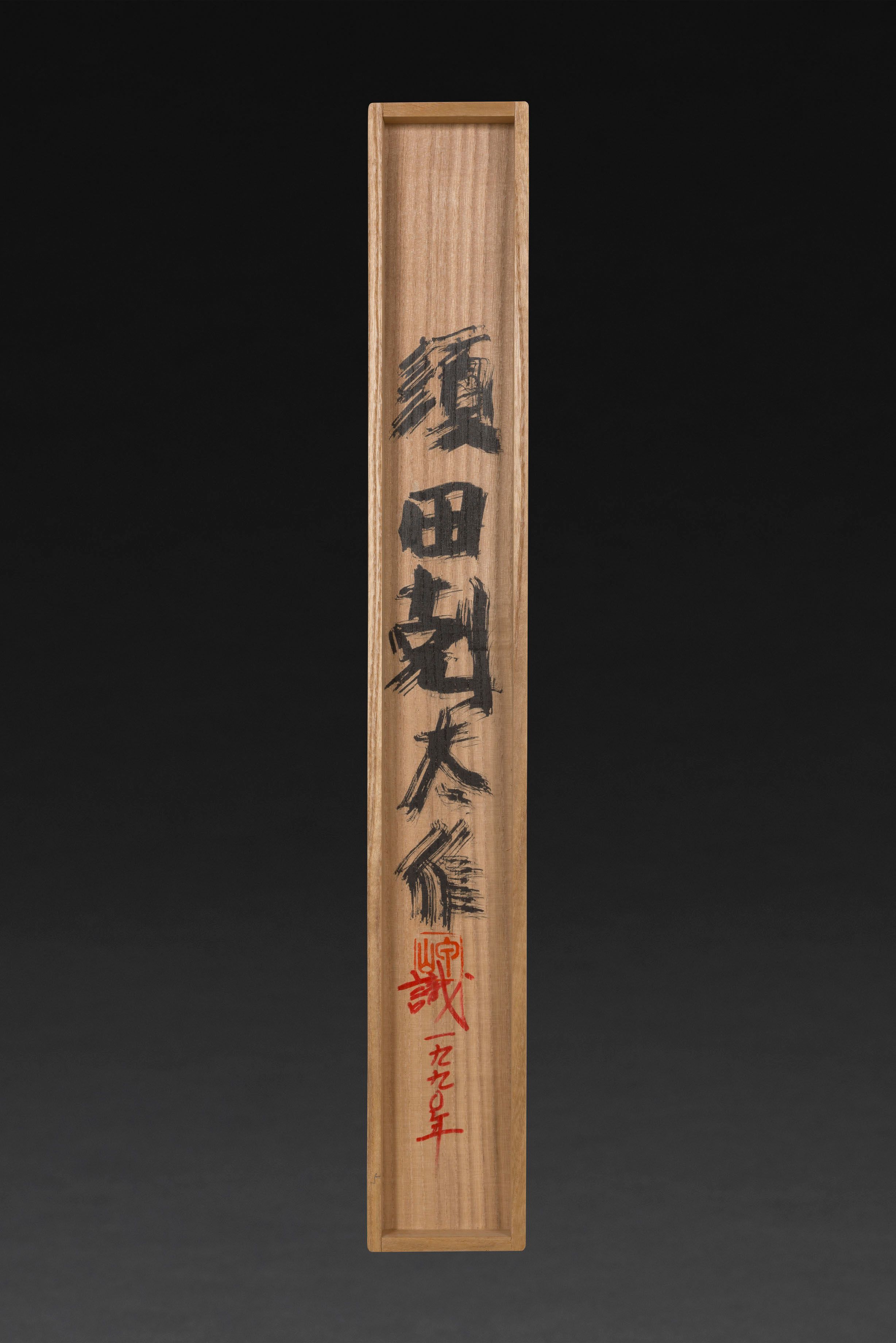
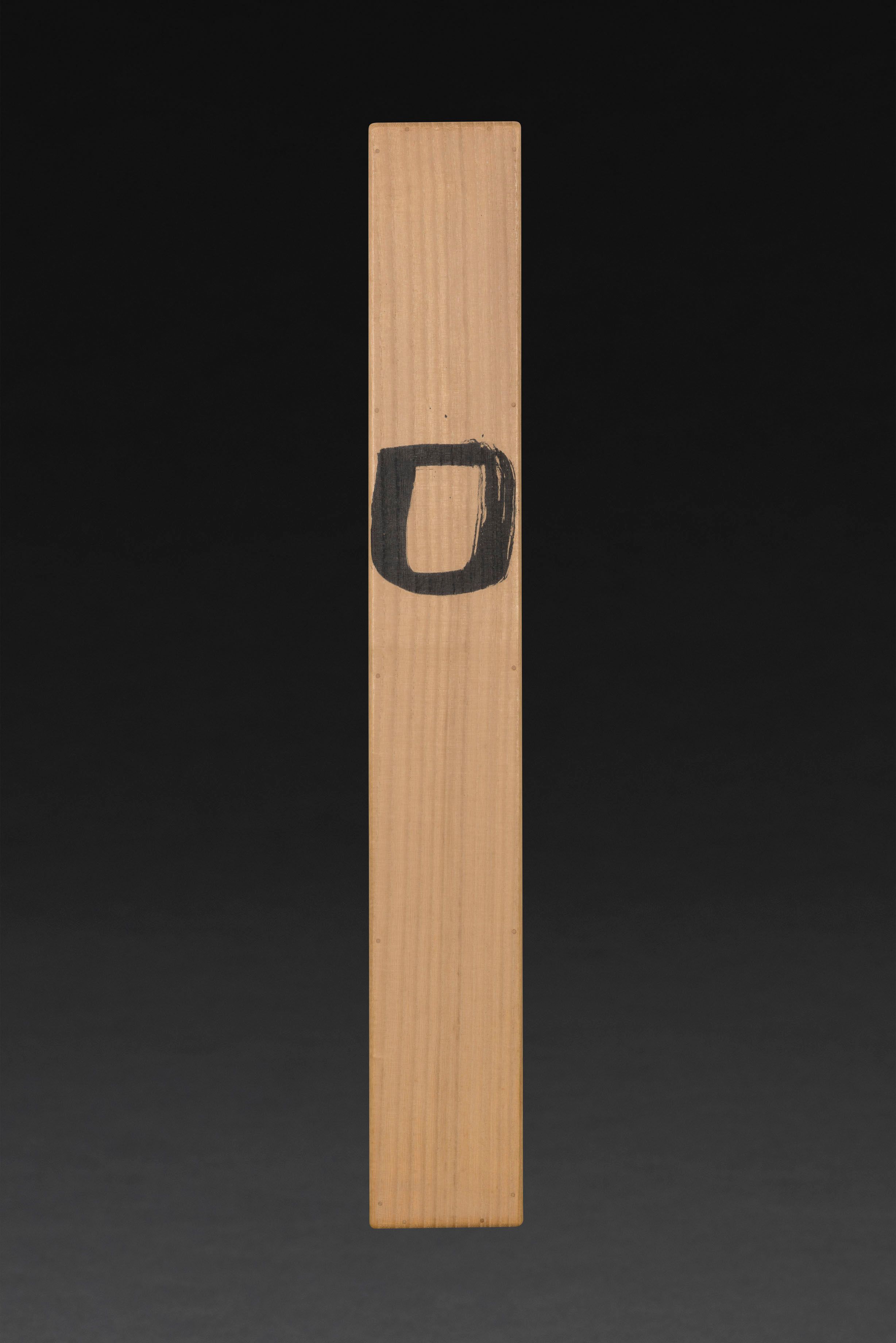
The wood box inscribed:
Lid: Circle
Lid interior: Suda Kokuta saku (Made by Suda Kokuta) Sealed Misaki. Shiki 1990 (Attestation 1990).
Ensō is a Japanese word meaning circle and a concept strongly associated with Zen. Ensō is one of the most popular subjects of Japanese calligraphy even though it is a symbol and not a character. It symbolises the Absolute, enlightenment, strength, elegance, the Universe, and the void; it can also symbolise the Japanese aesthetic itself. As an ‘expression of the moment’ it is often considered a form of minimalist expressionist art.
In Zen Buddhist painting, ensō represents a moment when the mind is free to simply let the spirit create. The brushed ink of the circle is usually done on silk or paper in one movement (but sometimes the great Bankei used two strokes) and there is no possibility of modification: it shows the expressive movement of the spirit at that time. Zen Buddhists believe that the character of the artist is fully exposed in how he or she draws an ensō. Only a person who is mentally and spiritually complete can draw a true ensō. Achieving the perfect circle, be it a full moon or an ensō is said to be The Moment of Enlightenment.
While some artists paint ensō with an opening in the circle, others complete the circle. For the former, the opening may express various ideas, for example that the ensō is not separate, but is part of something greater, or that imperfection is an essential and inherent aspect of existence (the idea of broken symmetry). The principle of controlling the balance of composition through asymmetry and irregularity is an important aspect of the Japanese aesthetic, the denial of perfection.