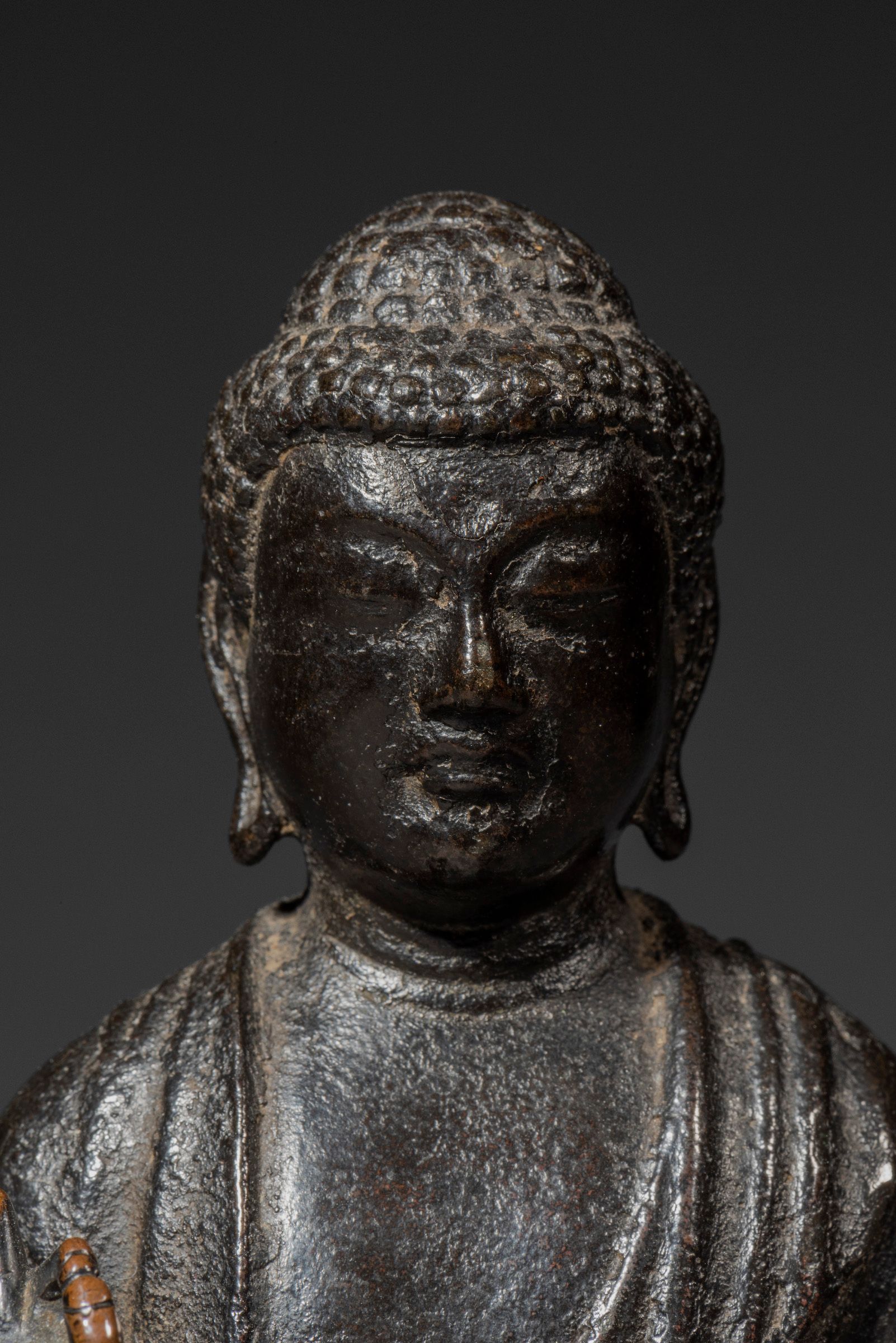
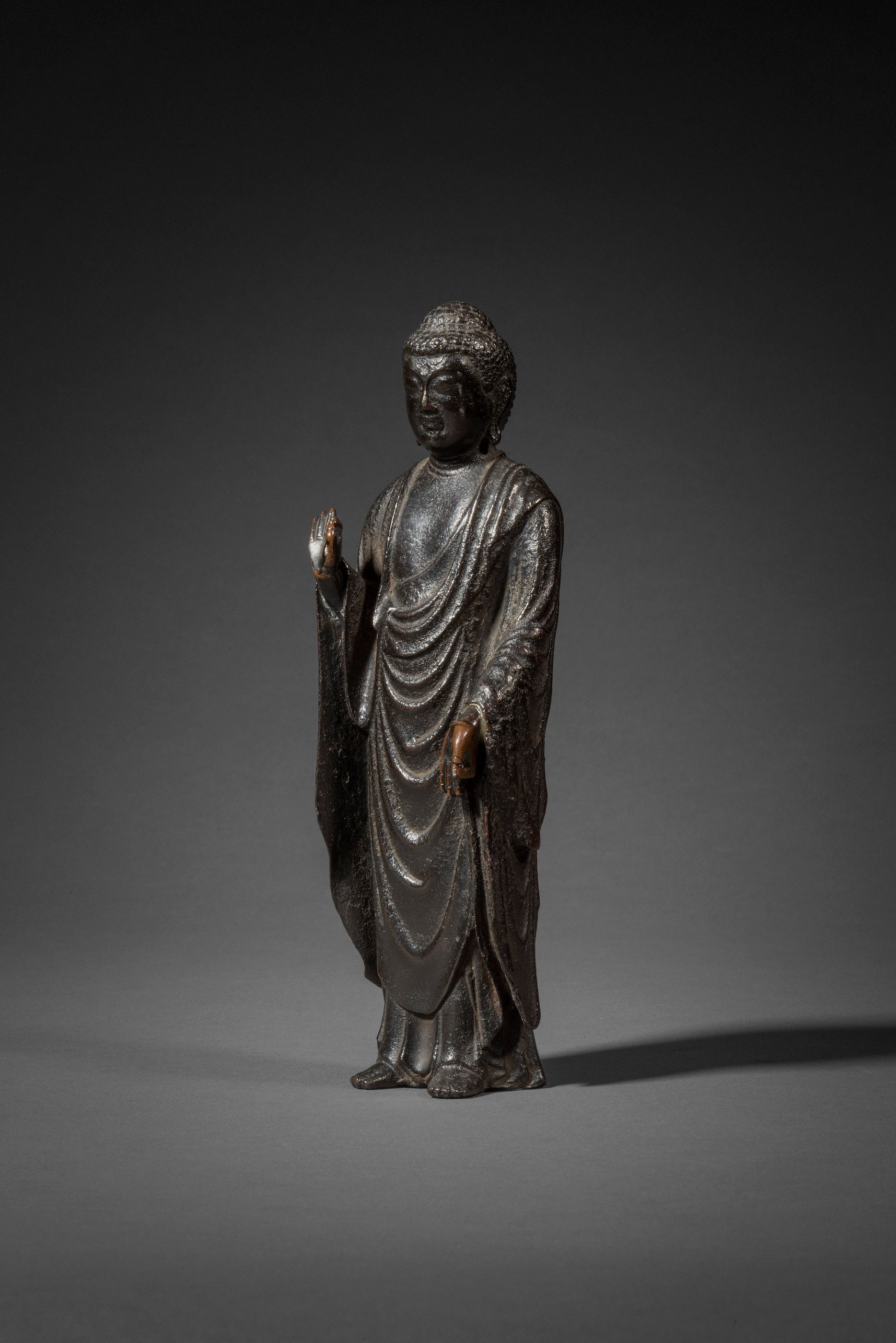
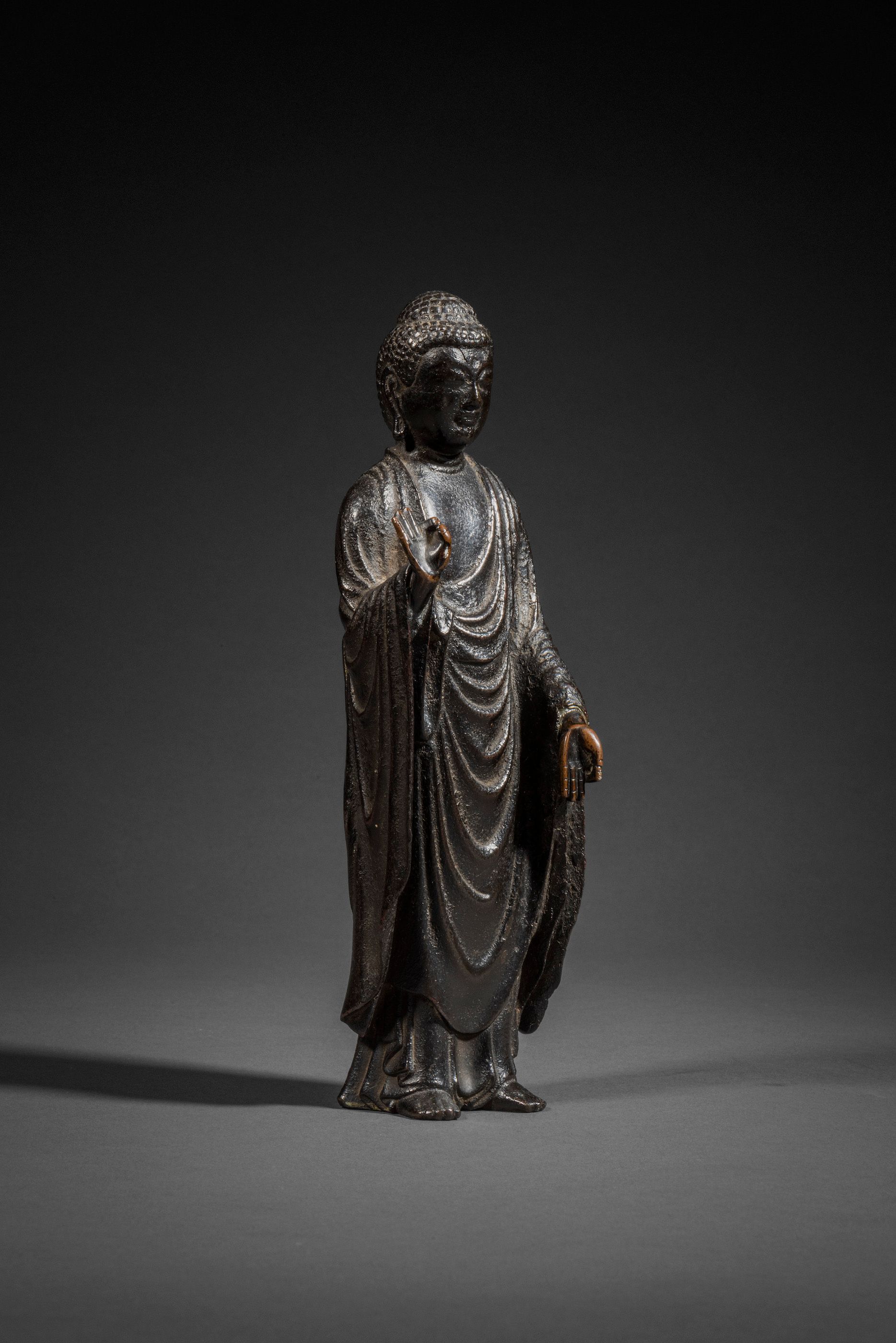
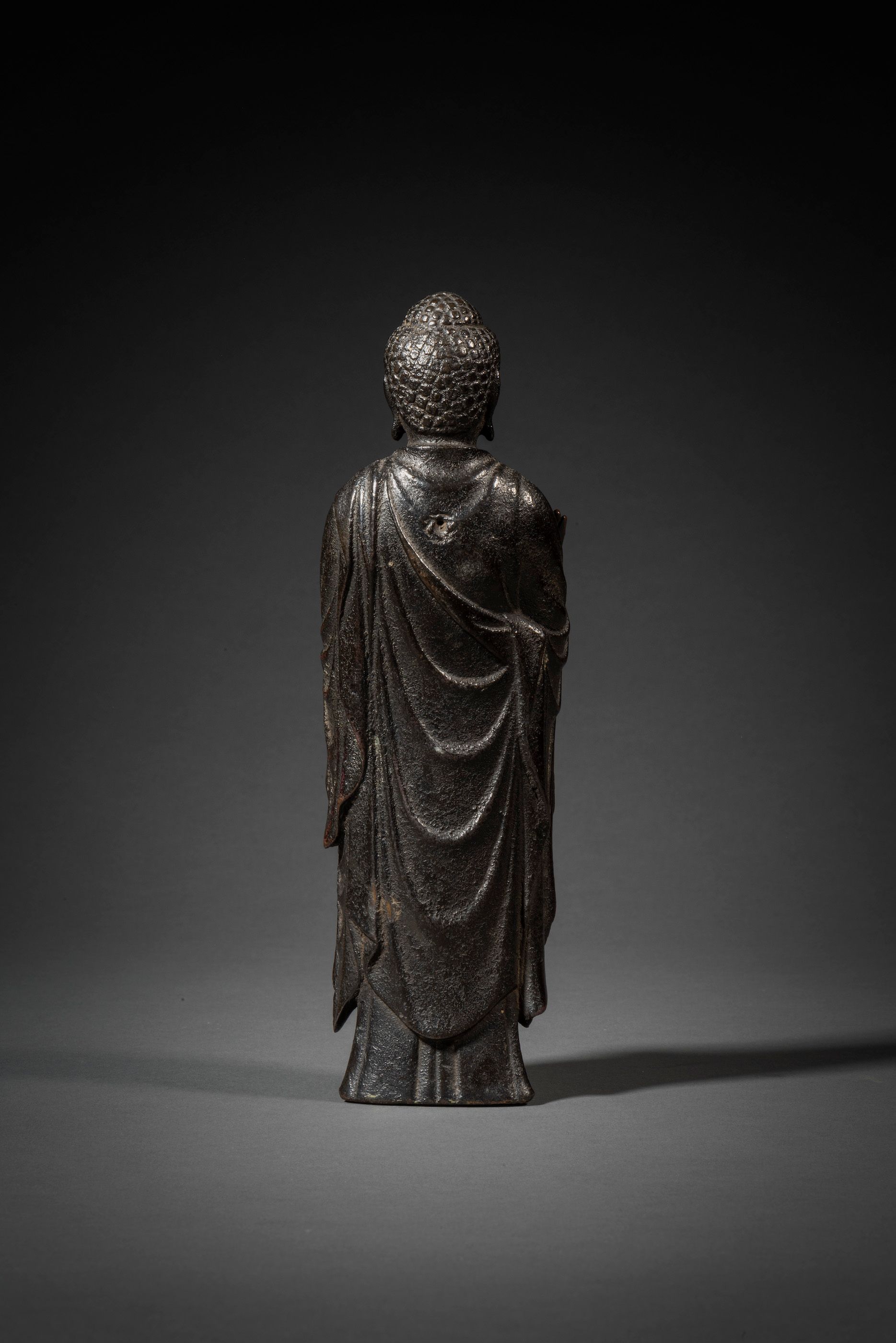
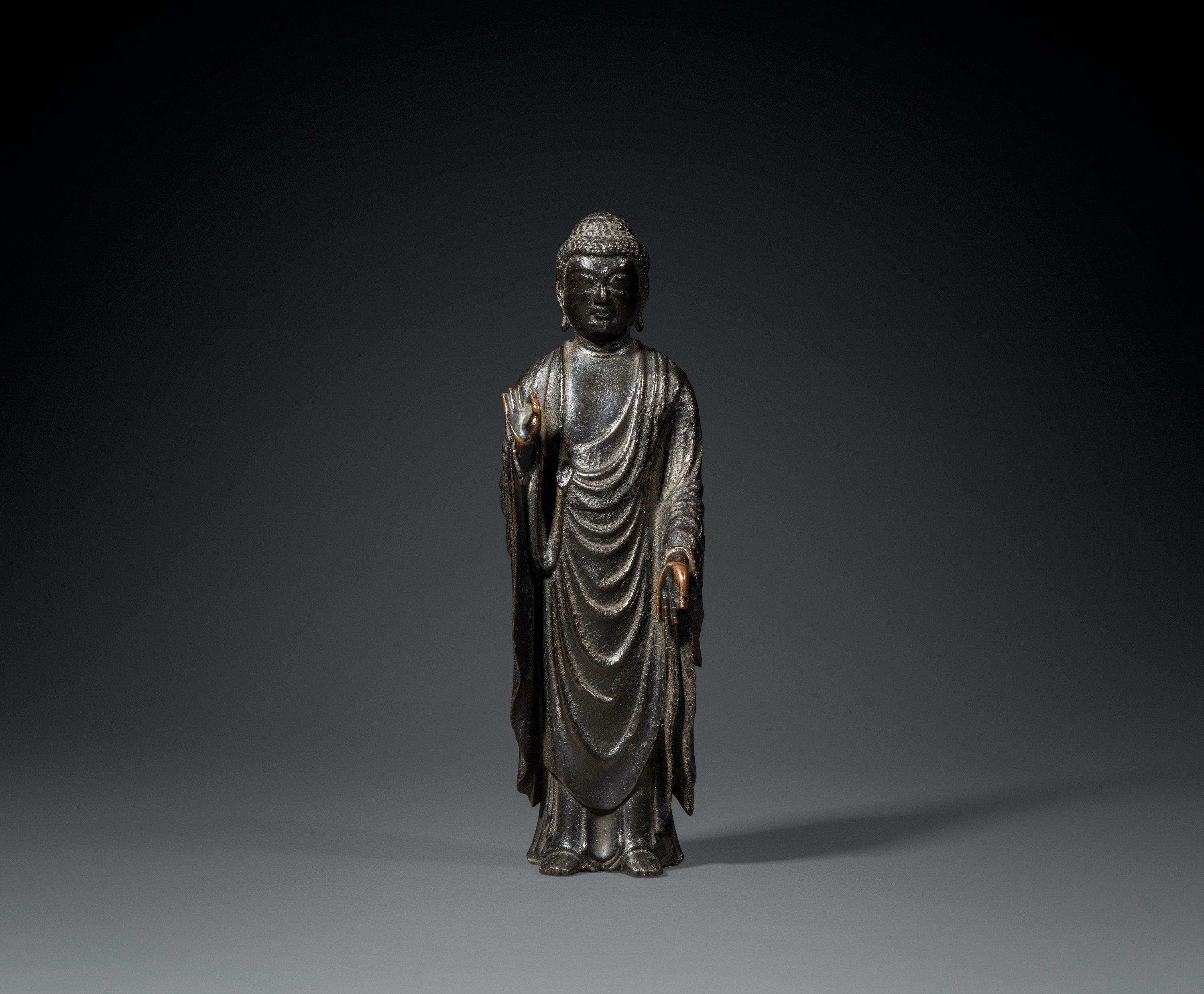
A bronze figure of a standing Amida Nyorai (Amitābha).
The right arm raised and the left arm extended with the forefinger and thumb of each hand forming a circle, representing the raigōin mudra, welcoming the believer into Amida's Great Western Paradise.
Japan, 14th century, Kamakura period.
Increased activity of the Jōdō sect from the early Kamakura period ignited great interest in the worship of Amida, resulting in a strong demand for devotional images. Bronze sculptures such as this are thought to take their inspiration from a triad group of Amida and two attendant bodhisattvas enshrined at Zenkōji Temple, Nagano Prefecture. This model group was purportedly brought from the Korean kingdom of Kudara when Buddhism was introduced into Japan in the 6th century.
Belief in Amida as Lord of the Western Paradise rose in popularity during the late 10th century. Based primarily on the concept of salvation through faith, it was not only a religion which appealed to a broad range of people, but also a direct assertion of piety against the dogmatic and esoteric ritual of the more traditional Tendai and Shingon sects. In Amida’s Western Paradise the faithful are reborn, to progress through various stages of increasing awareness until finally achieving complete enlightenment.
Provenance: Old English Collection London U.K
For a comparable bronze figure from Kamakura period, see:
Victor Harris and Ken Matsushima, Kamakura: The Renaissance of Japanese Sculpture 1185-1333, (British Museum, London, 1991), pp. 124/125, no.38 (Amida Nyorai, dated 1300, Seikōji temple, Chiba).
Buddhist Art

A kakebotoke


Zenkoji Kannon Bosatsu

Buddhist wood panels

A kakemono with the monk Hōnen

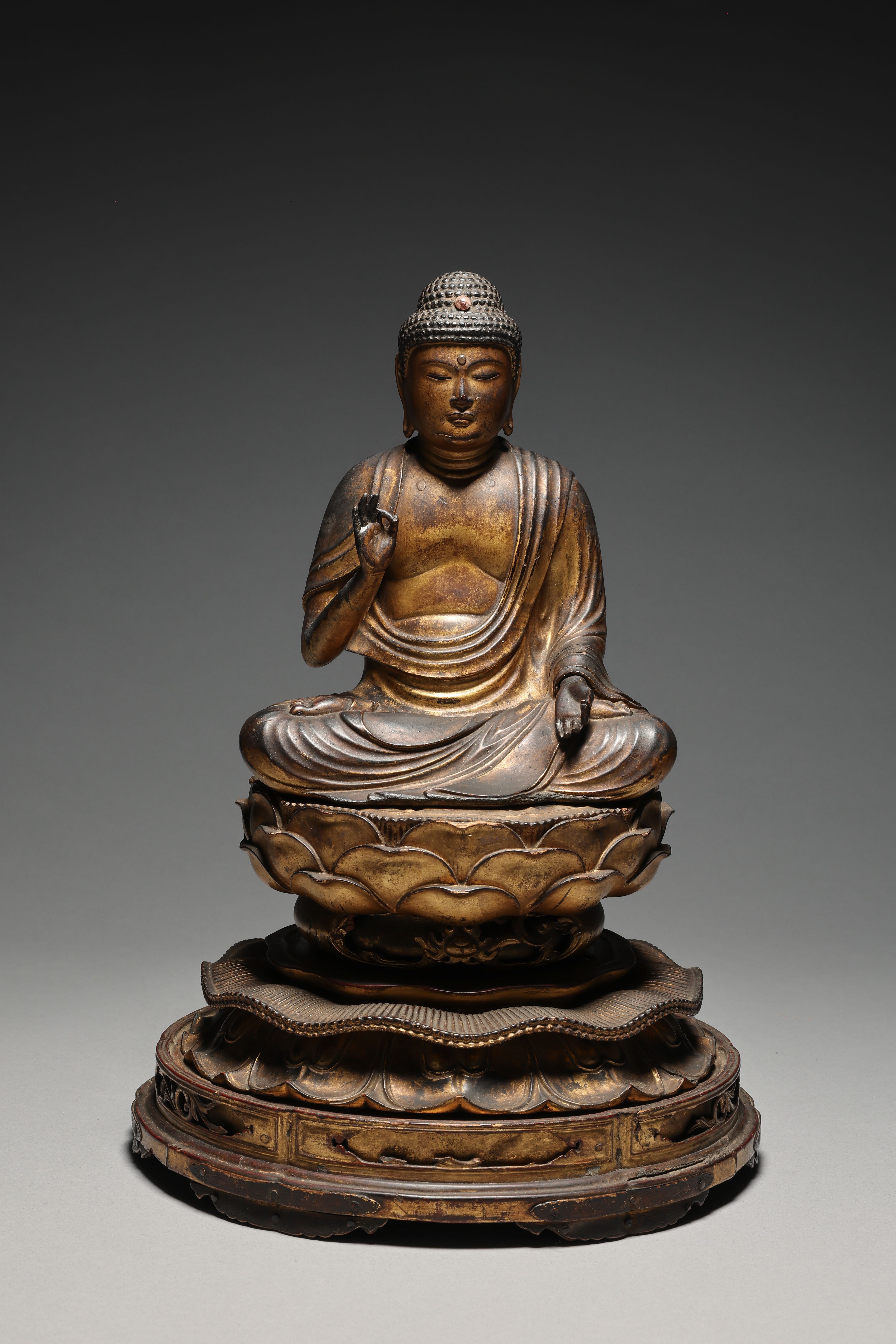
A lacquer and gilt wood figure of a seated Amida Nyorai (Amitābha) dressed in a flowing robe

A wood figure of Amida Nyorai, Heian/Kamakura period

Amida Buddha

Jizō Bosatsu

Amida Buddha

A silk kakemono with Kannon

An iron nyoi

Zushi with Kannon

A bronze kakebotoke of Kannon