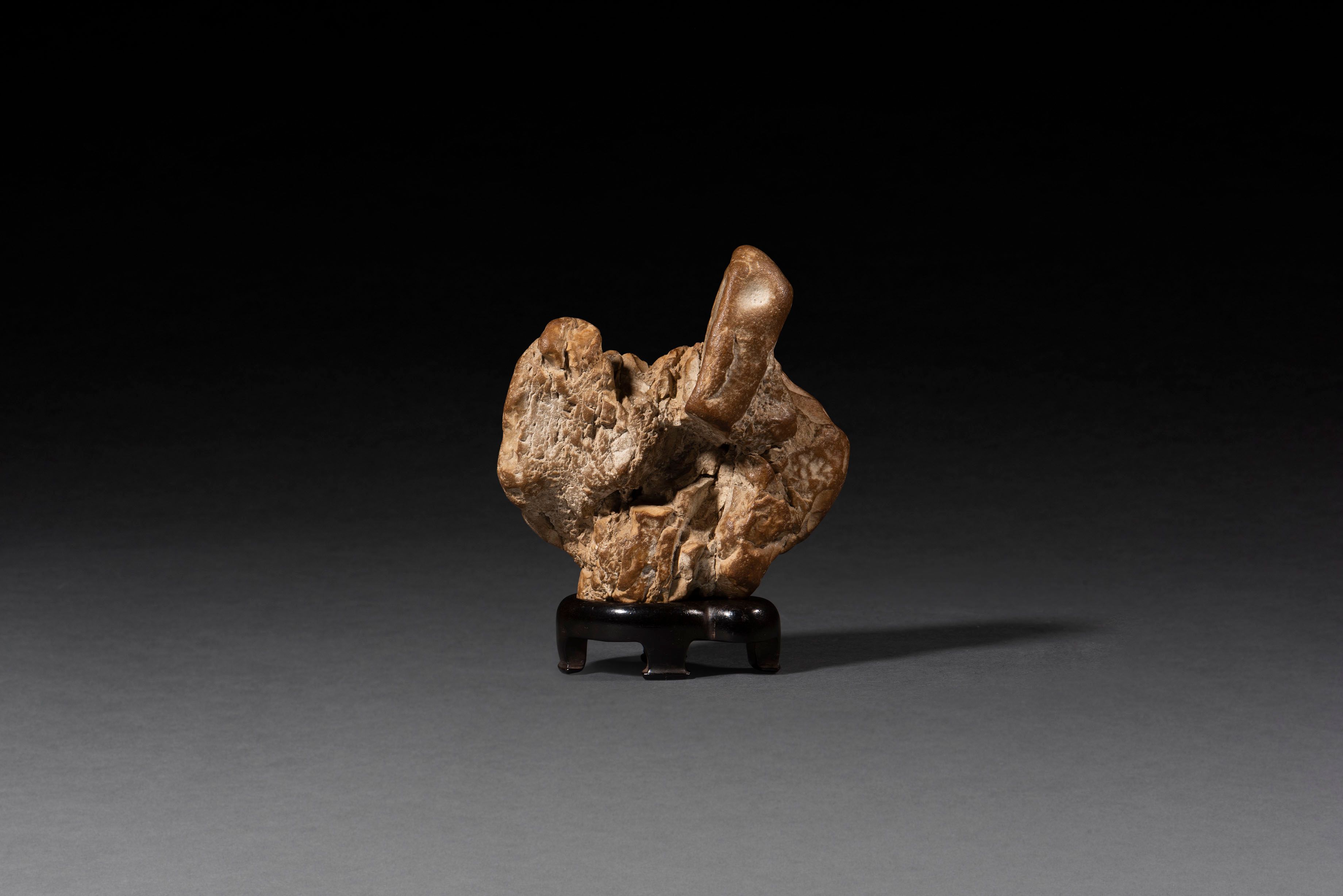
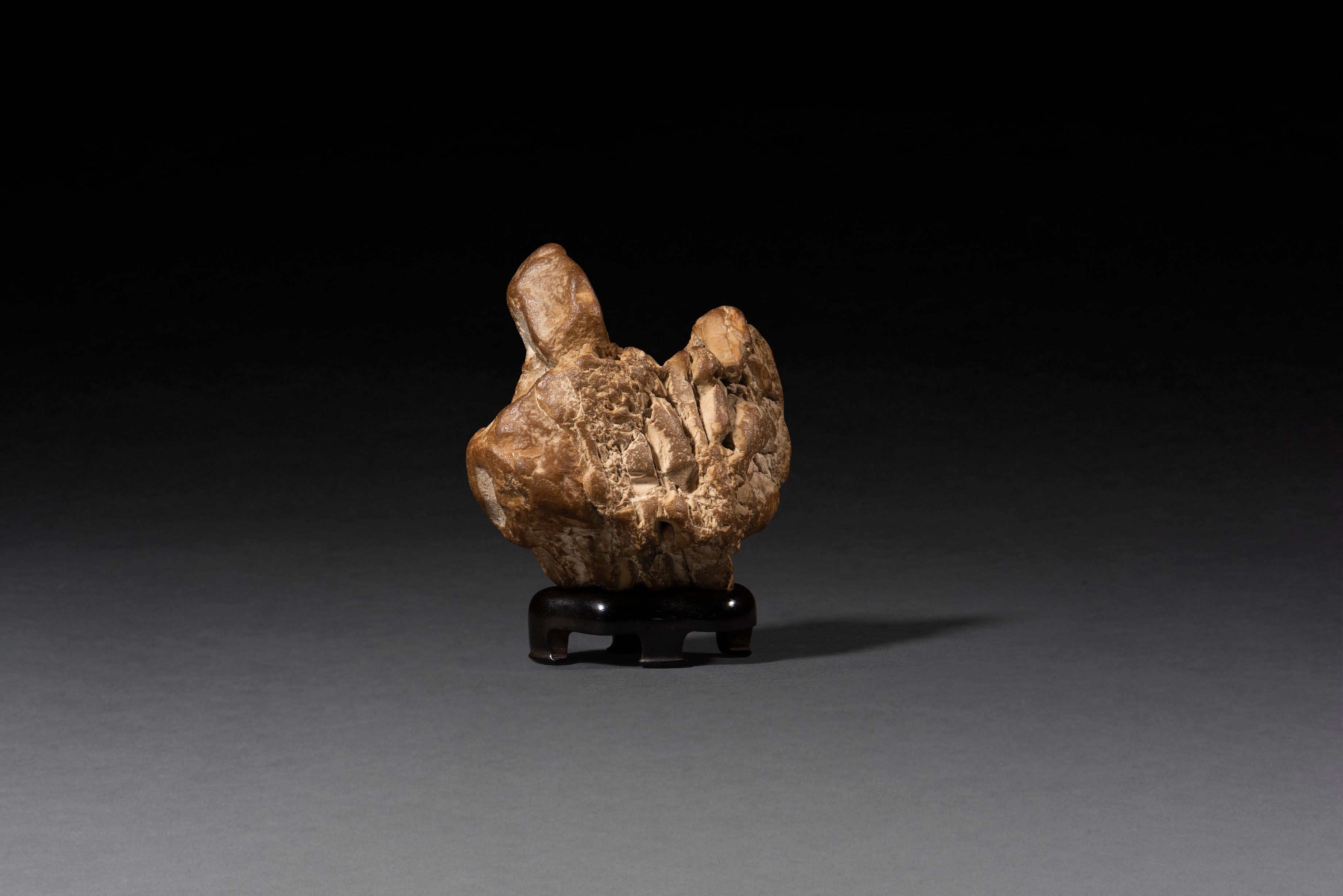
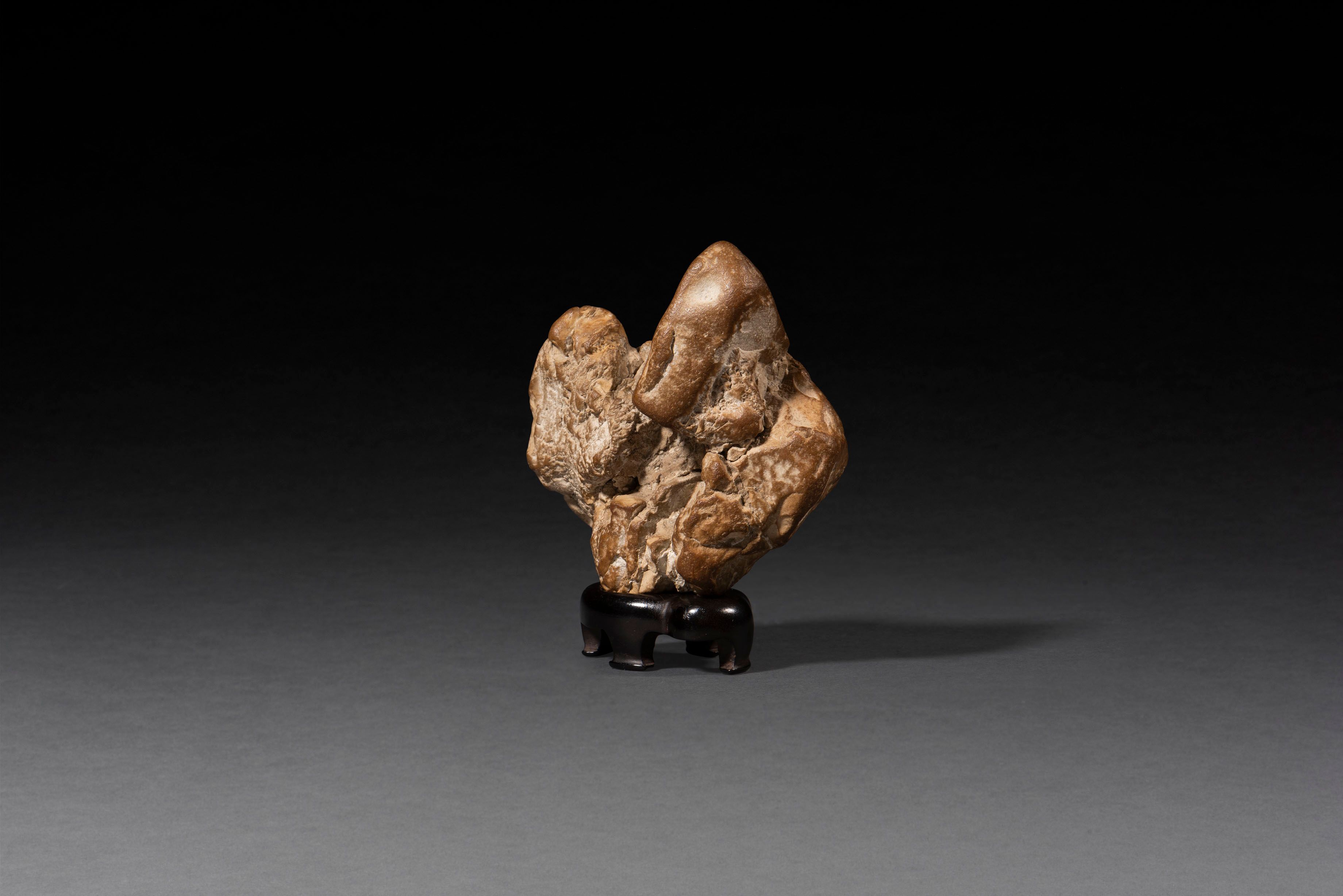
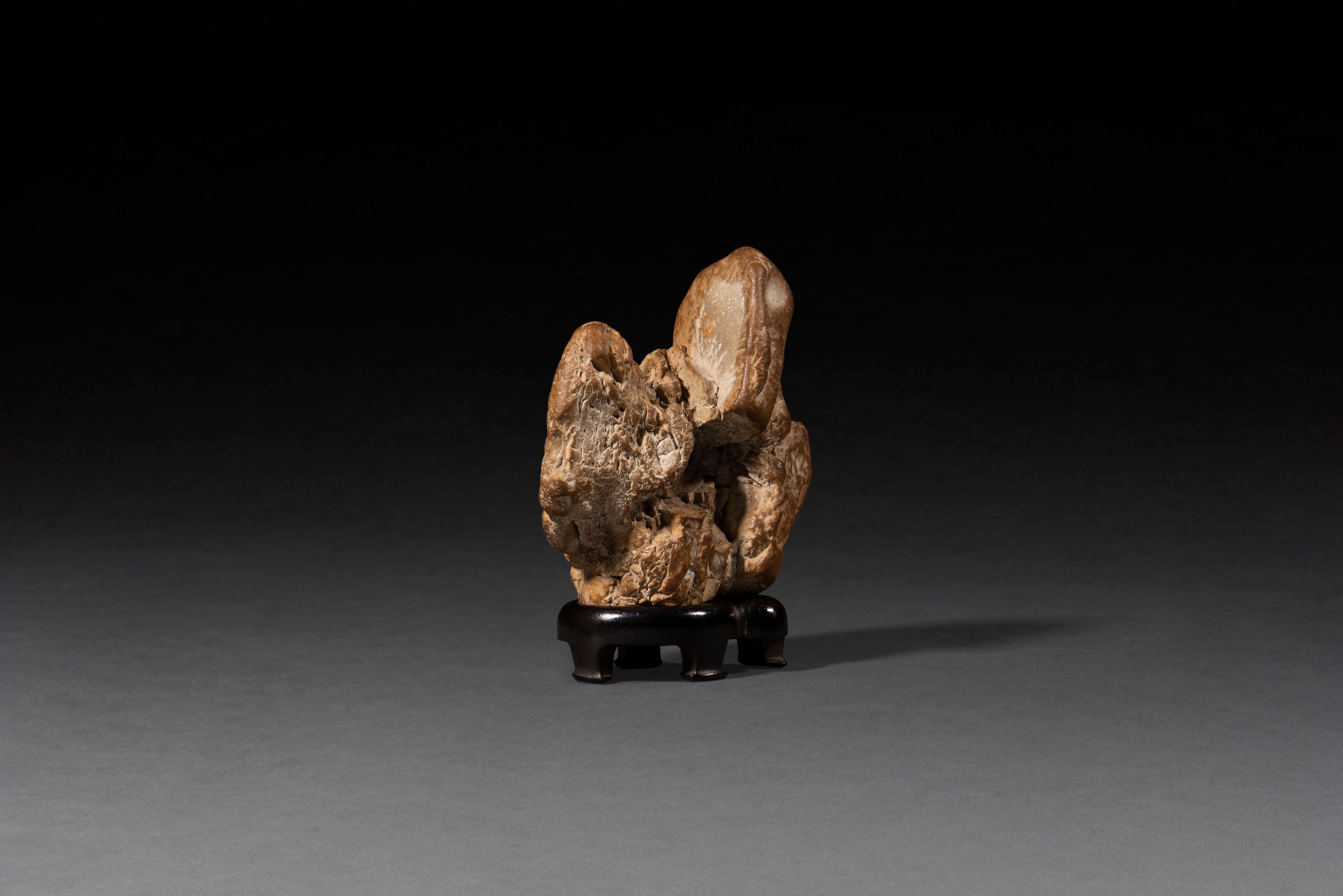
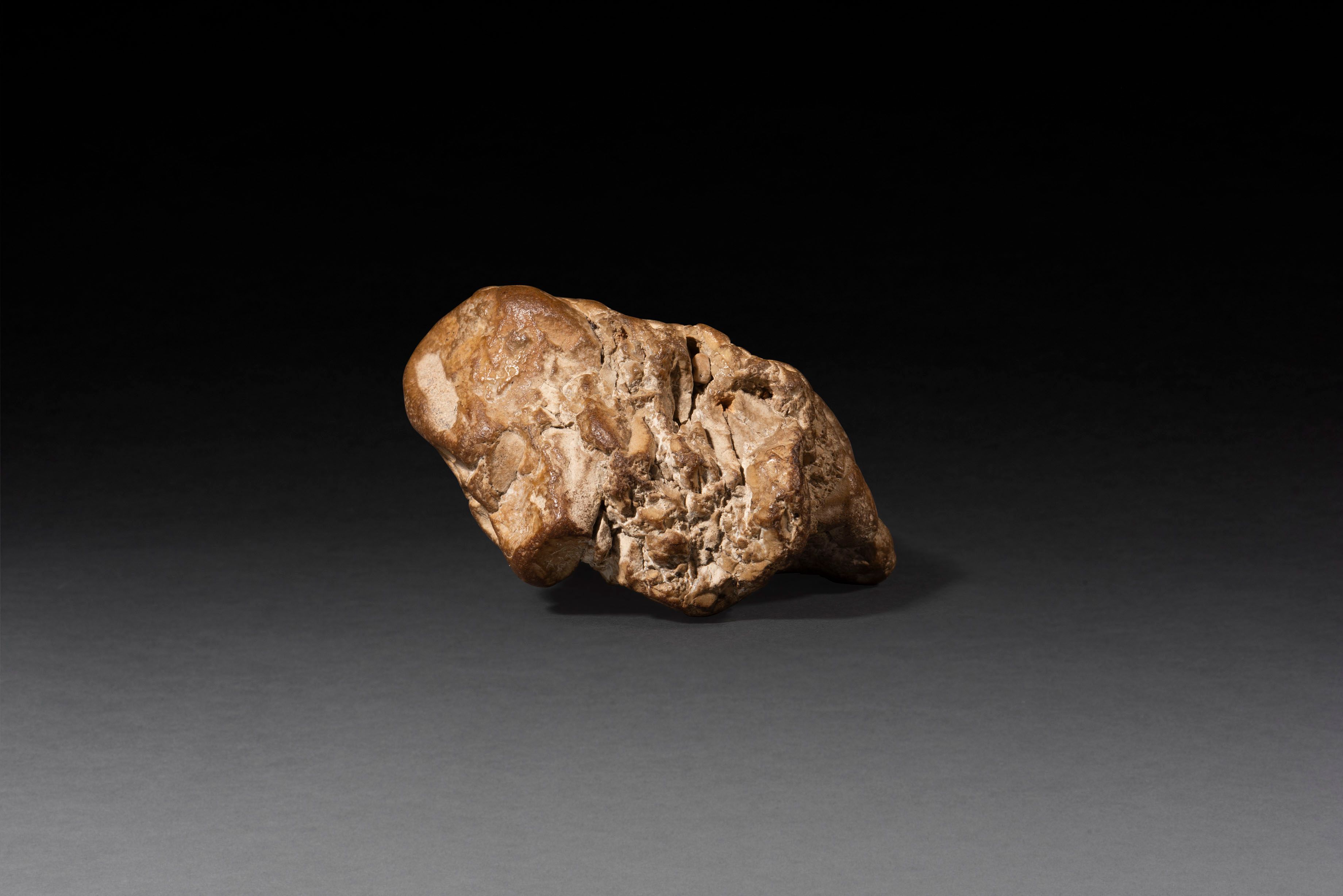

A Chinese Suiseki (viewing stone), with wood stand.
Chinese origin, Japan, 19th-20th century, Meiji period.
Dimensions of the Suiseki only (no stand): H. 6.5cm x W. 7cm x D. 4.5cm (2½” x 2¾” x 1¾”).
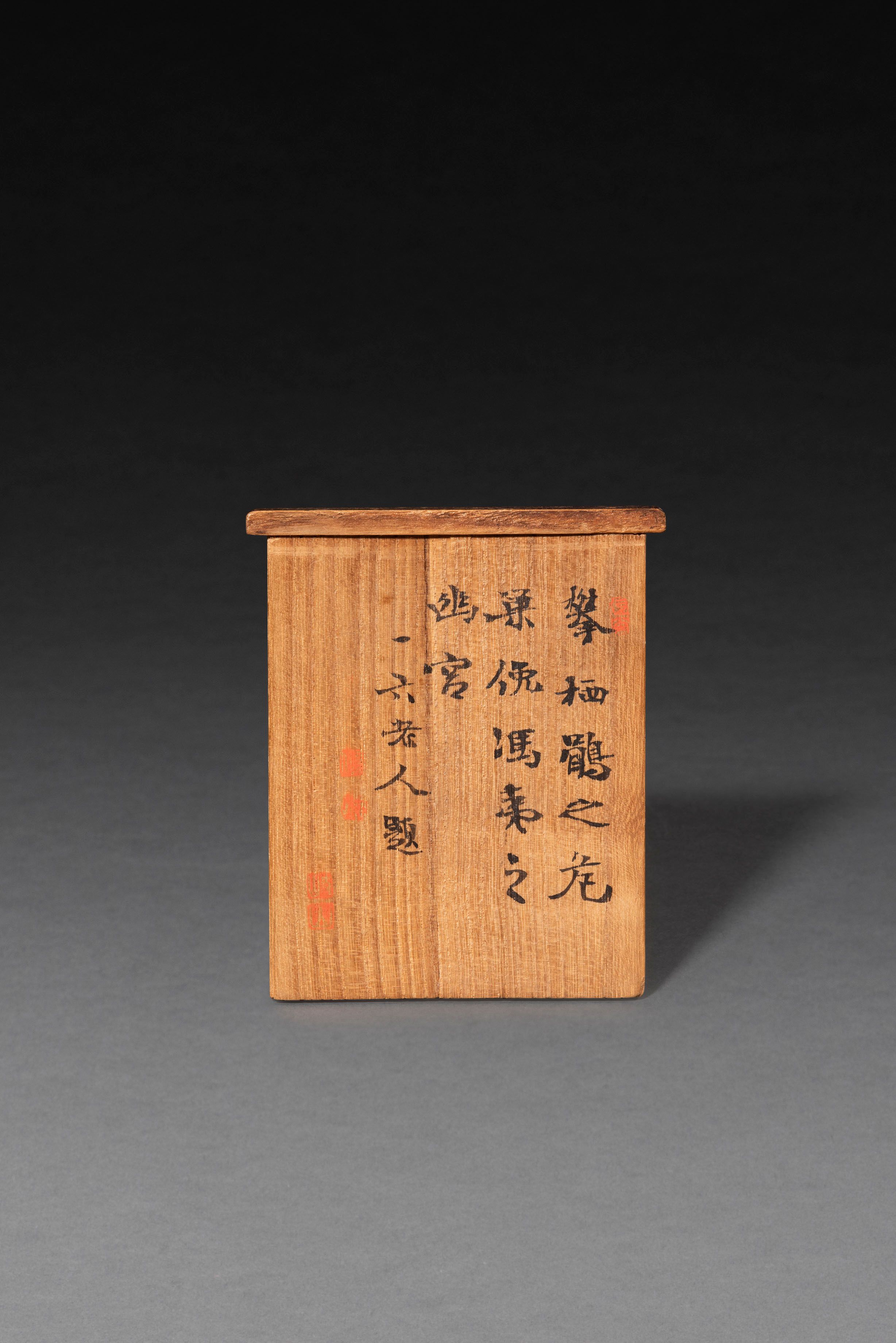
Awasebako (fitted box):
Inscribed the title Enki (circle boundary), inscribed a Chinese style poem and signed Ichiroku rojin (an old man Ichiroku).
Provenance: Iwaya Ichiroku (1834-1905), a renowned calligrapher and politician from Shiga prefecture.
Suiseki, literally, “water and stones”, are small, naturally shaped stones traditionally admired for their beauty and are closely associated with nature and natural landscapes. They are similar to Chinese scholar’s rocks which were brought to Japan as Imperial gifts and influenced the development of suiseki in Japan. Suiseki have been appreciated and meditated by Japanese people in general but in particular by scholars, nobles and tea masters. They are expressive with special shapes, colour or texture, and suggest scenes from nature such as mountains, waterfalls, lakes, rivers, thatched huts, hills and cliffs. They can also resemble animals or human shapes or simply bear rare and beautiful features. All of which are greatly appreciated by the connoisseur.
Iwaya Ichiroku (1834-1905) from the Omi province, present day Shiga prefecture, was a politician of the Meiji government as well as a renowned calligrapher who also practiced classical Chinese poems and paintings. He is known as one of meiji no sanpitsu, the three master calligraphers of the Meiji era (1868-1912).
Works of Art

A wood Kyōgen mask of Usobuki

A Chinese Suiseki (viewing stone)

A kanshitsu chawan (dry-lacquer teabowl) of bamboo shape

A bronze flower vessel of mimikuchi

A pottery kake hanaire (hanging flower vessel)

A red lacquer Kamakura-bori dai-kogo (incense box)

A Lacquered Shield

Lacquer Cabinet with Mother of Pearl Inlays

A bronze brazier

A bronze hanging flower vessel


A Chinese bronze censer

A ceramic vase by Makuzu Kōzan II


A ceramic te-aburi (hand warmer)

A Tokoname storage jar

A wood Noh mask of Koomote

A black lacquer bon (tray)

A bronze brazier

An iron nyoi

A Tokoname storage jar