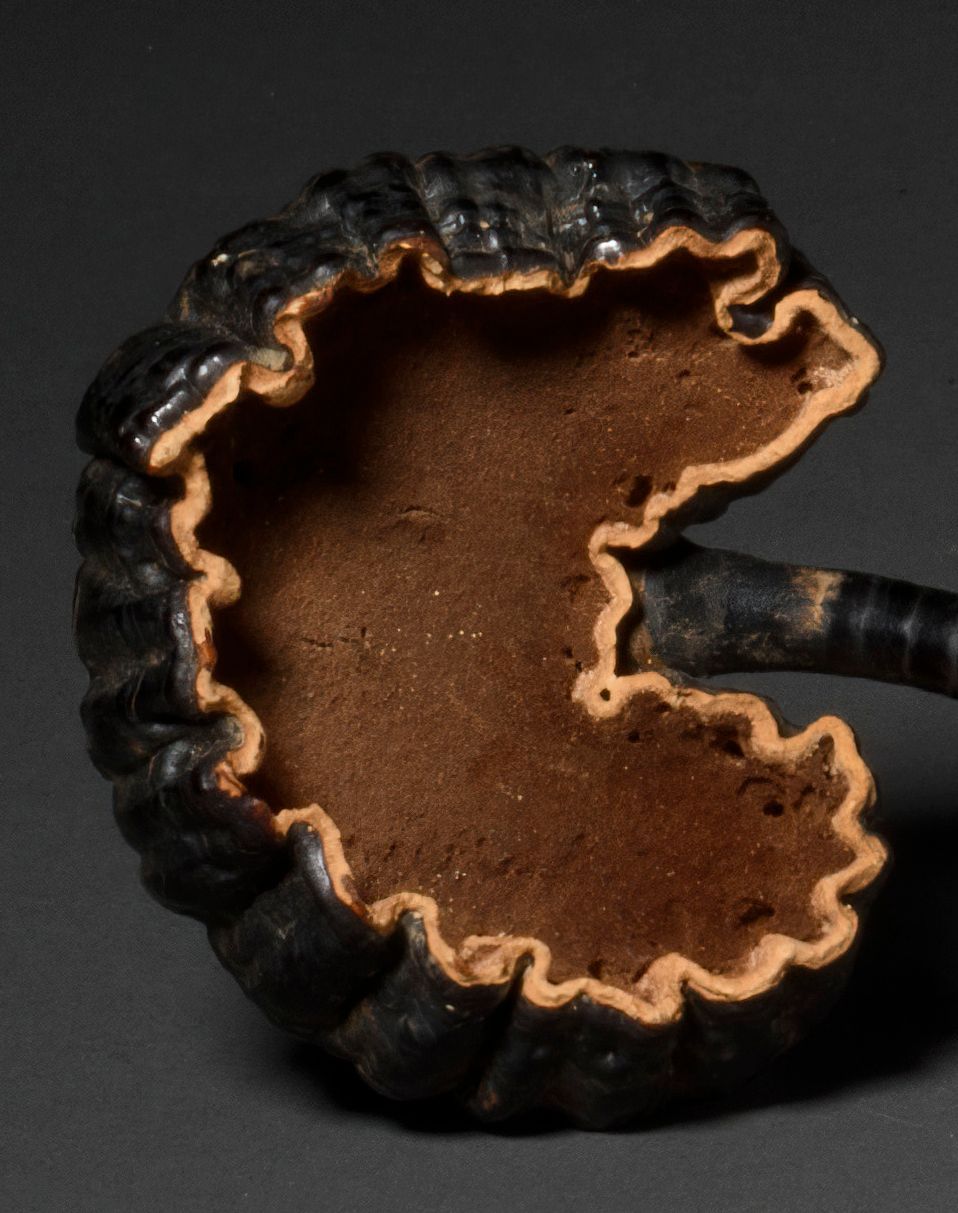
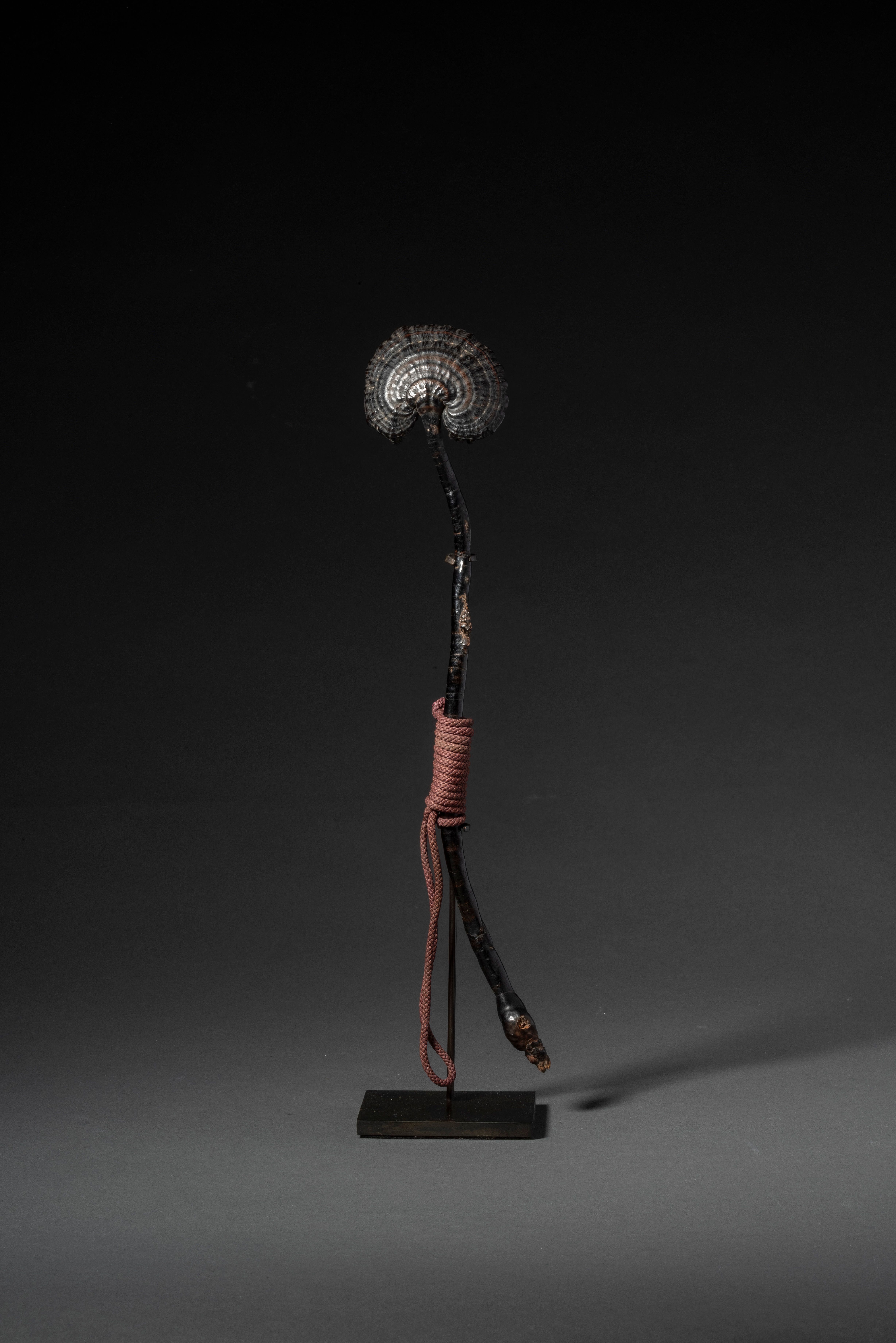
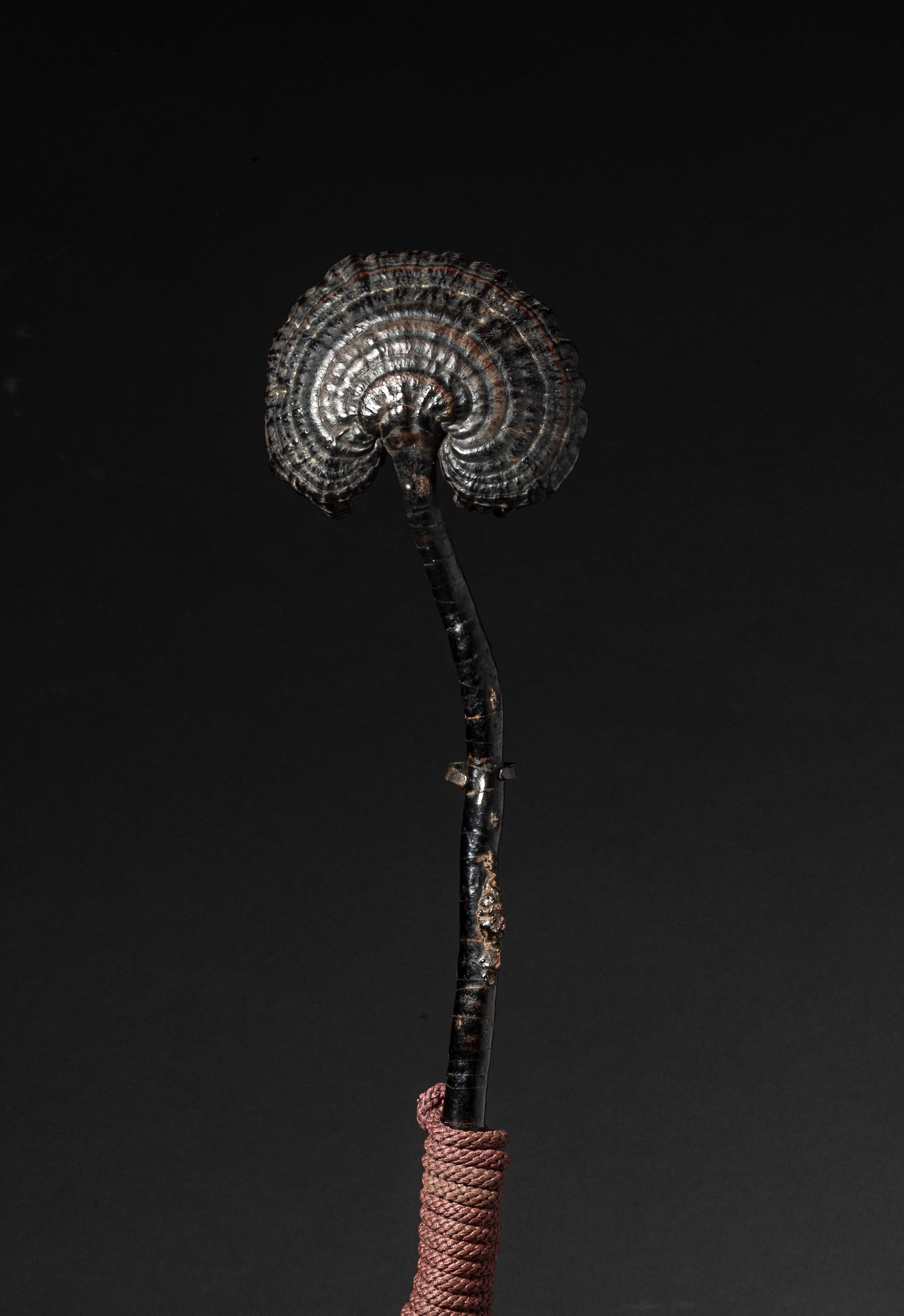
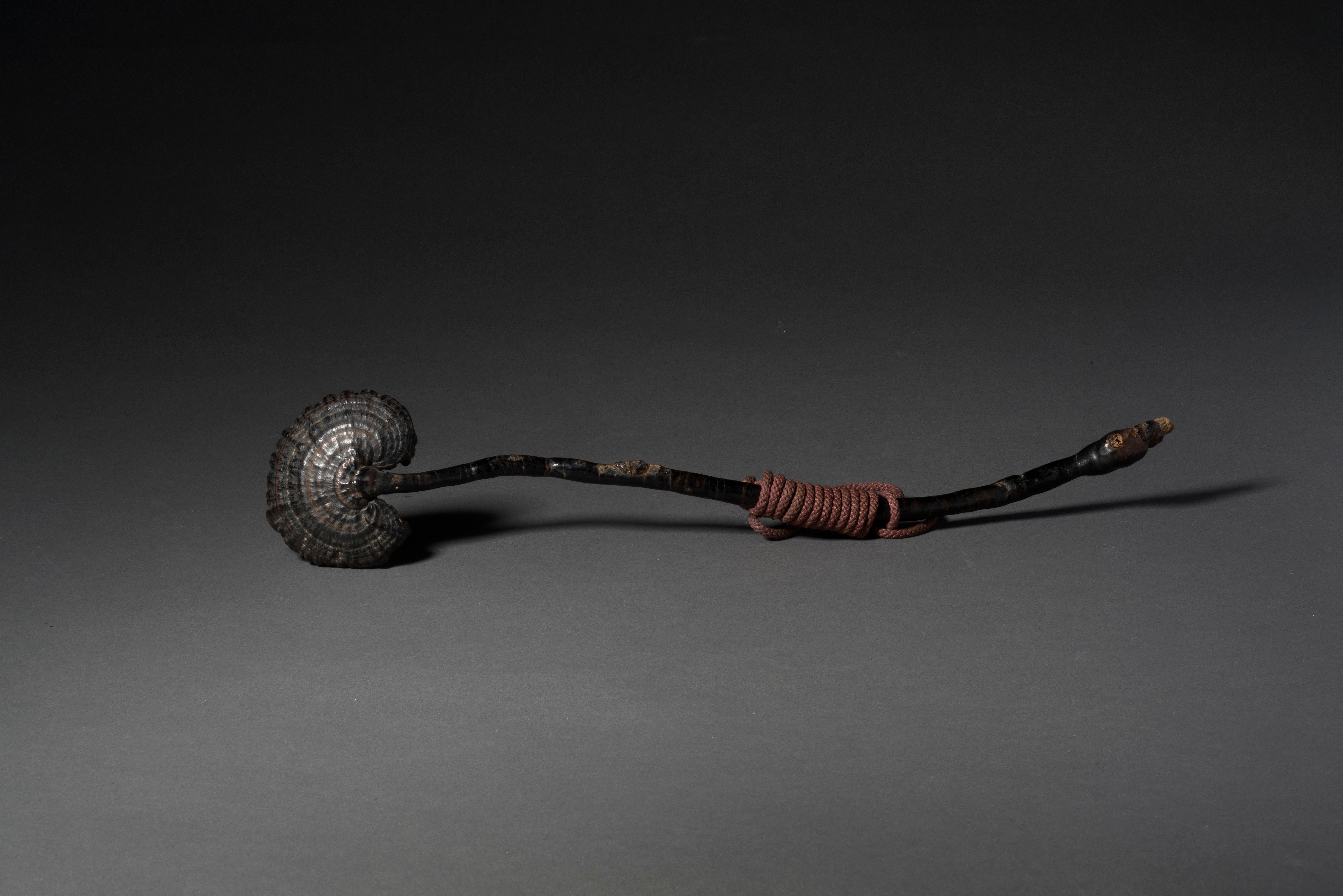
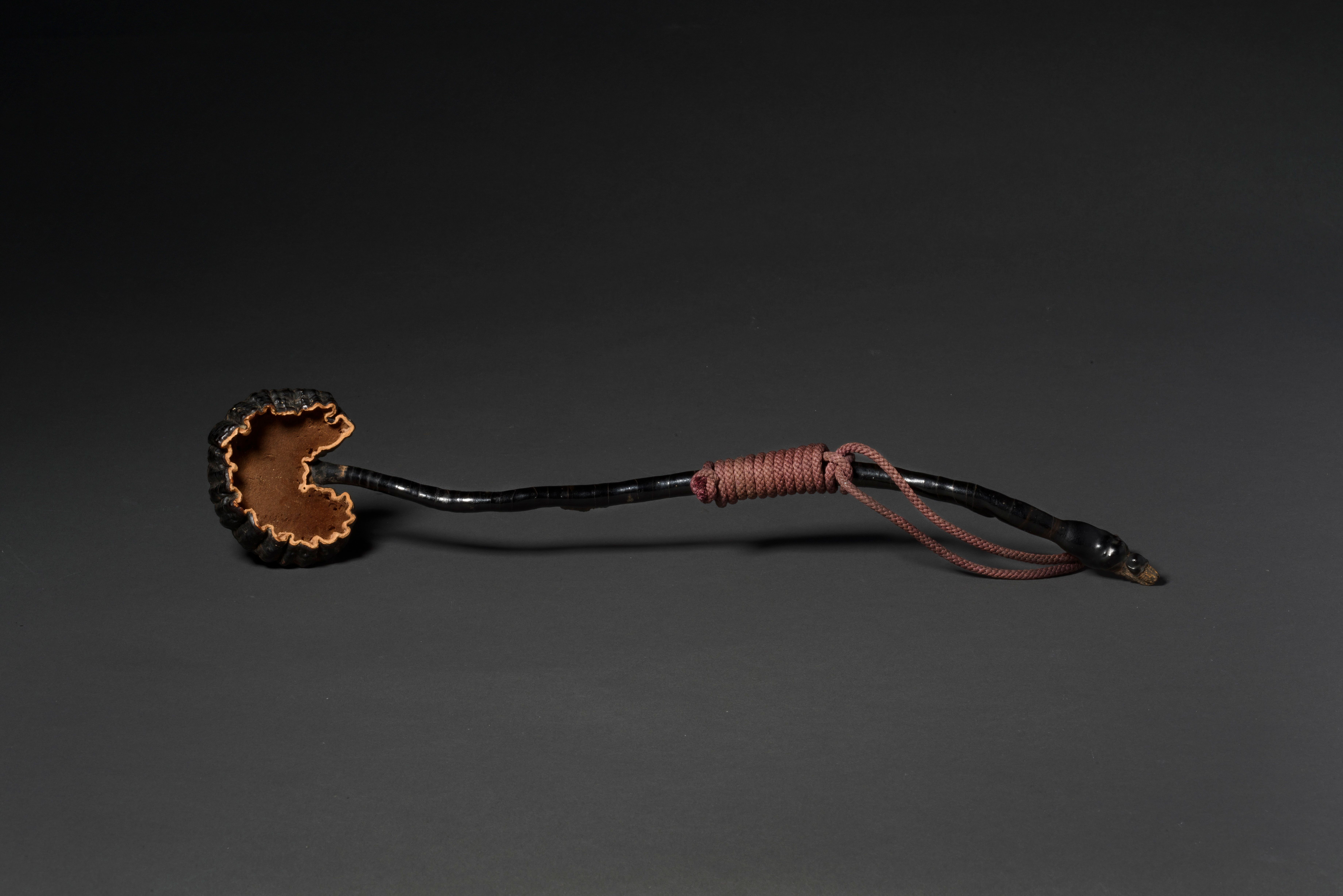
A nyoi (priest staff) formed from natural reishi (bracket fungus) mushrooms
Japan 19th century Meiji period
Nyoi literally means “as one wishes”. They appeared in Japanese monasteries as early as the 9th century and went on to become an integral part of the Buddhist priest’s regalia, used as an aid to meditation.They were also taken up by the literati who used them as objects of reflection to be held during sencha, the Chinese tea ceremony. This style of tea ceremony originated in China during the Tang dynasty (618-907) and was particularly popular during the mid Tokugawa era (1603-1867) when it was referred to as the original way of Tea.
The reishi fungus (lingzhi in Chinese), literally supernatural mushroom encompasses several fungal species typical throughout East Asia. Other Japanese names are zuisō (auspicious plant), sensō (immortality plant), kadodetake (departure mushroom), hijiridake (sage mushroom), hijiridake (sage mushroom), magoshakushi (grandchild ladle) and mannentake (10,000 year mushroom).
Reishi are said to possess anti-tumour, anti-bacterial and anti-viral properties and have been used in traditional Chinese herbal medicine for more than 2,000 years, making it one of the oldest mushrooms known to have been used medicinally.
Buddhist Art

A kakebotoke

Zenkoji Kannon Bosatsu

A nyoi (priest staff) formed from natural reishi (bracket fungus) mushrooms

Buddhist wood panels

A kakemono with the monk Hōnen

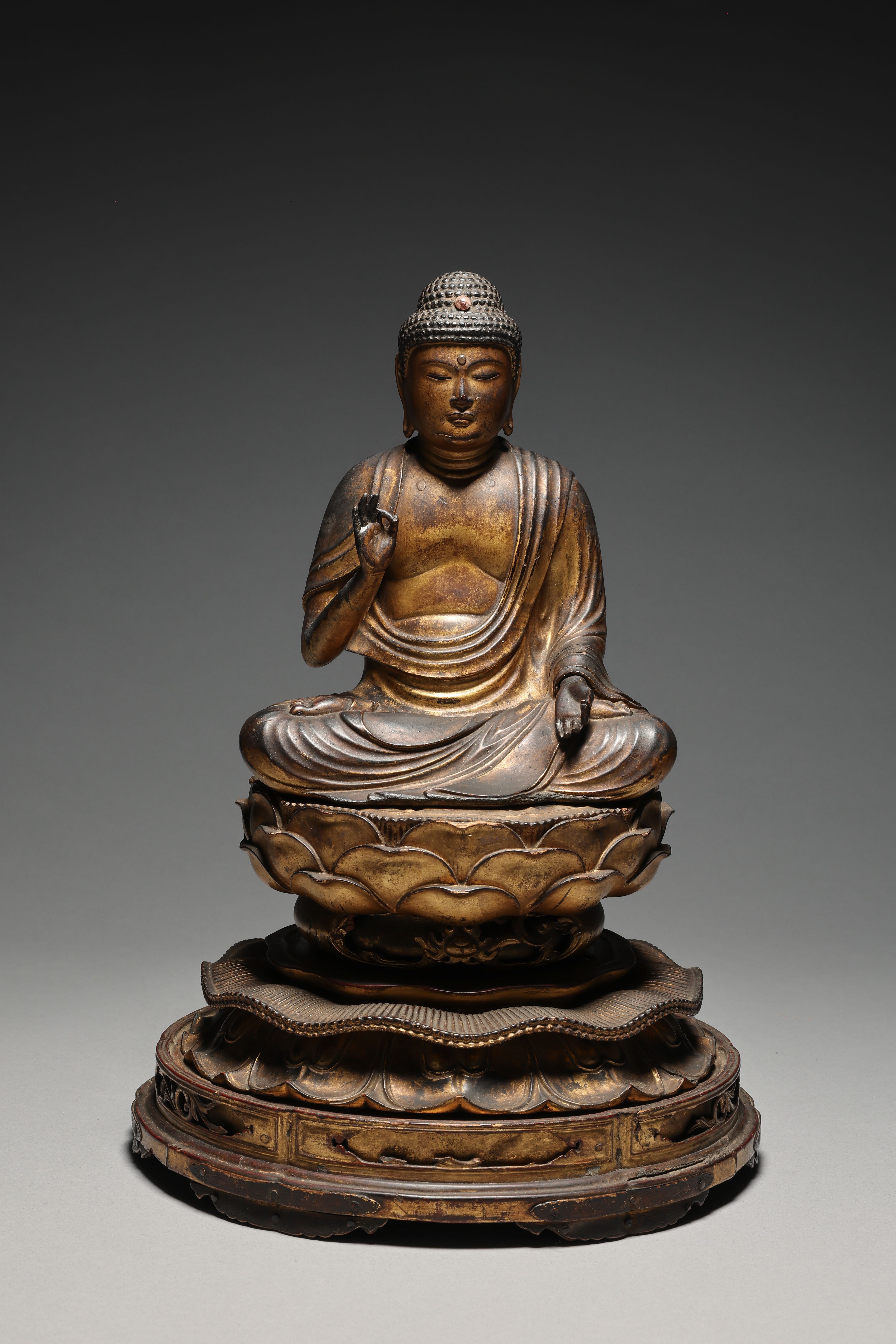
A lacquer and gilt wood figure of a seated Amida Nyorai (Amitābha) dressed in a flowing robe

A wood figure of Amida Nyorai, Heian/Kamakura period

Amida Buddha

Jizō Bosatsu

Amida Buddha

A silk kakemono with Kannon

An iron nyoi

Zushi with Kannon

A bronze kakebotoke of Kannon