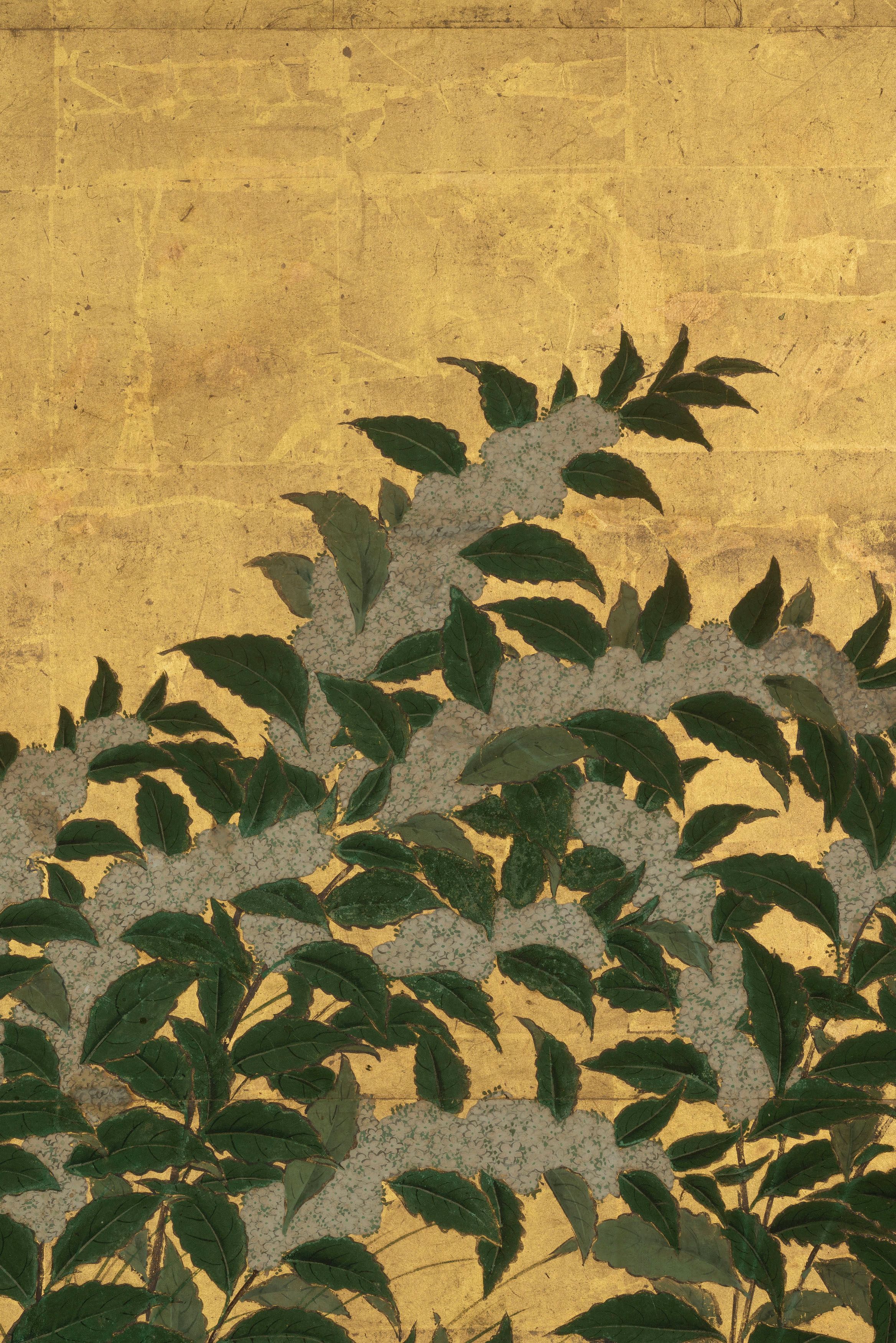
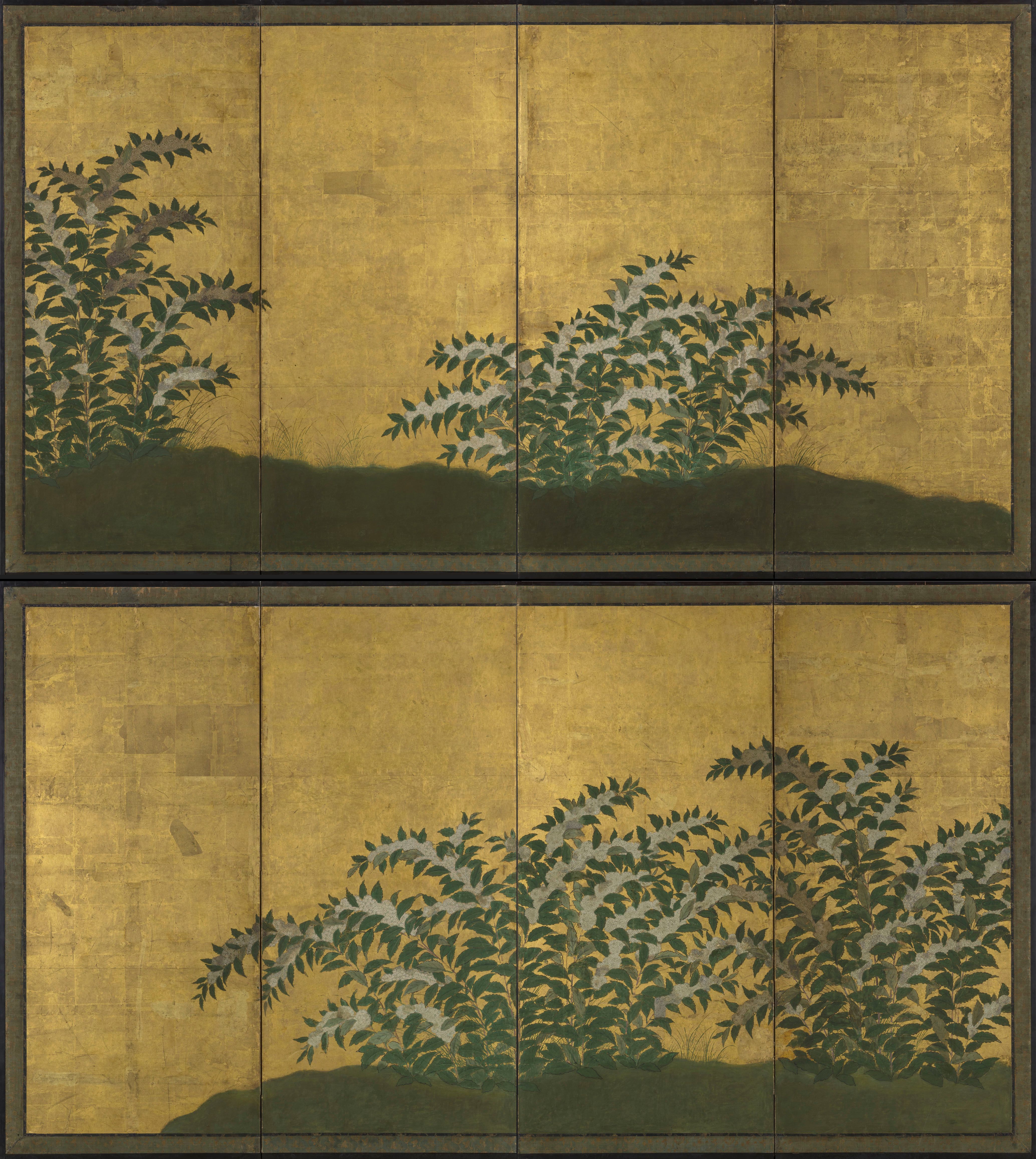
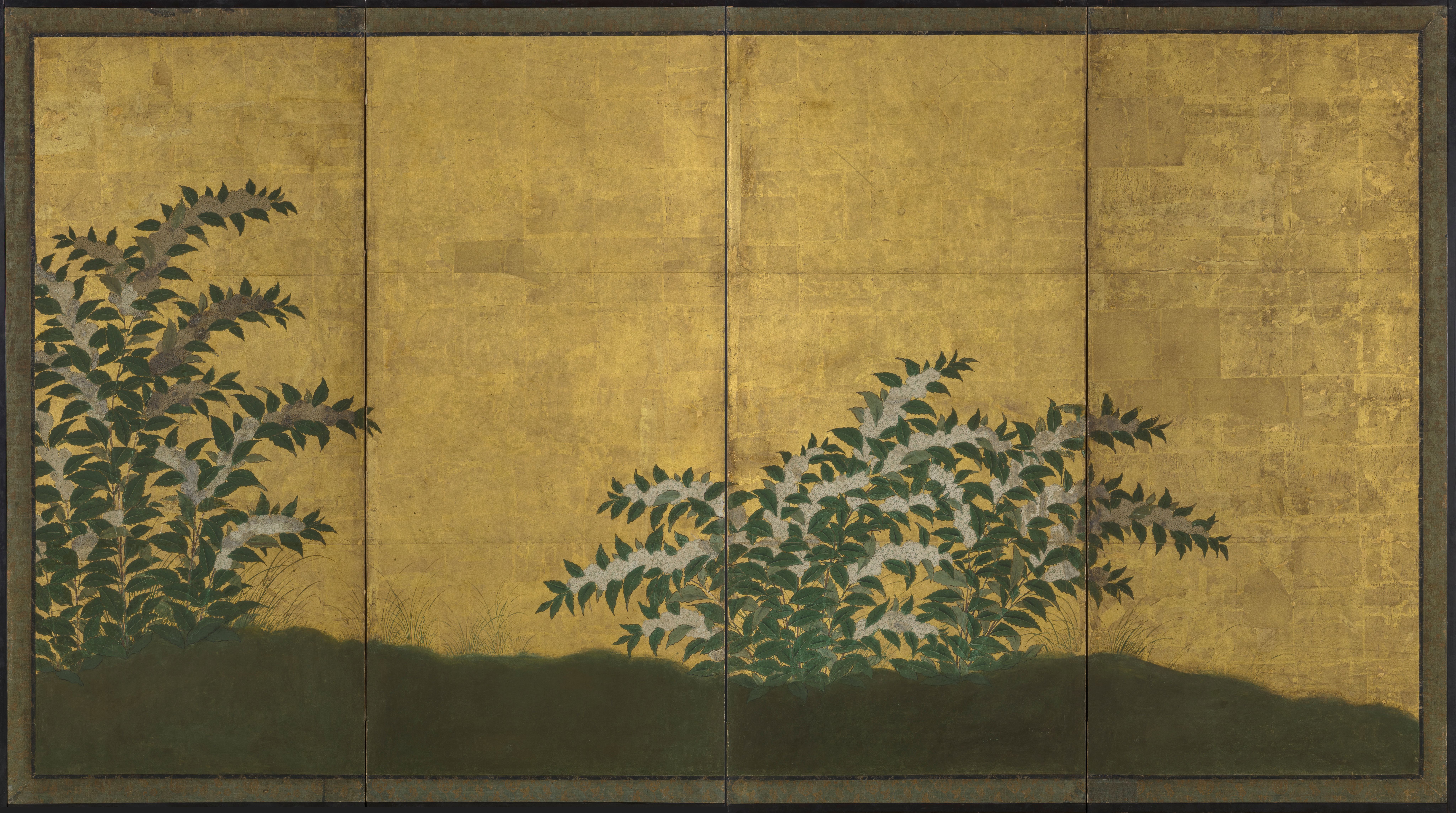
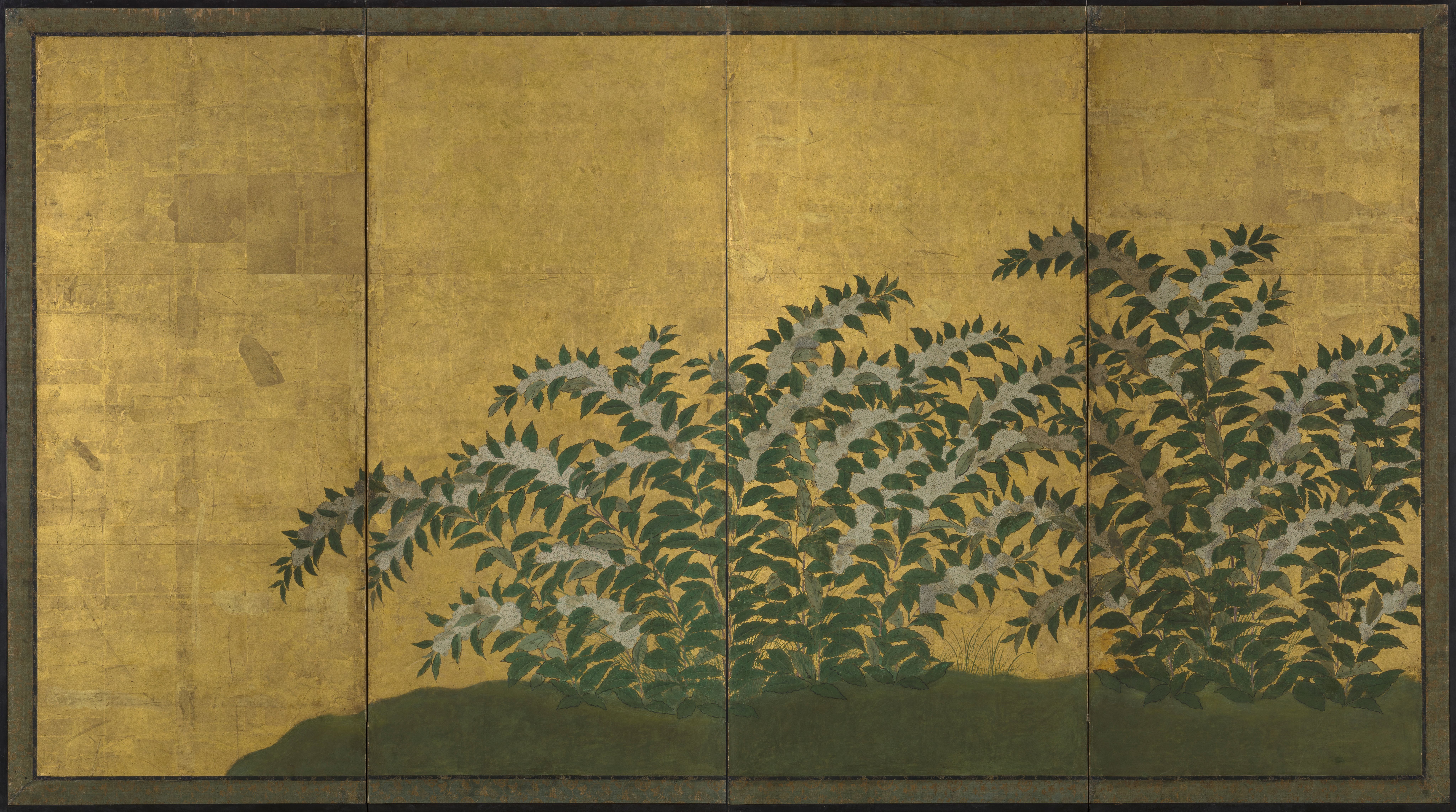

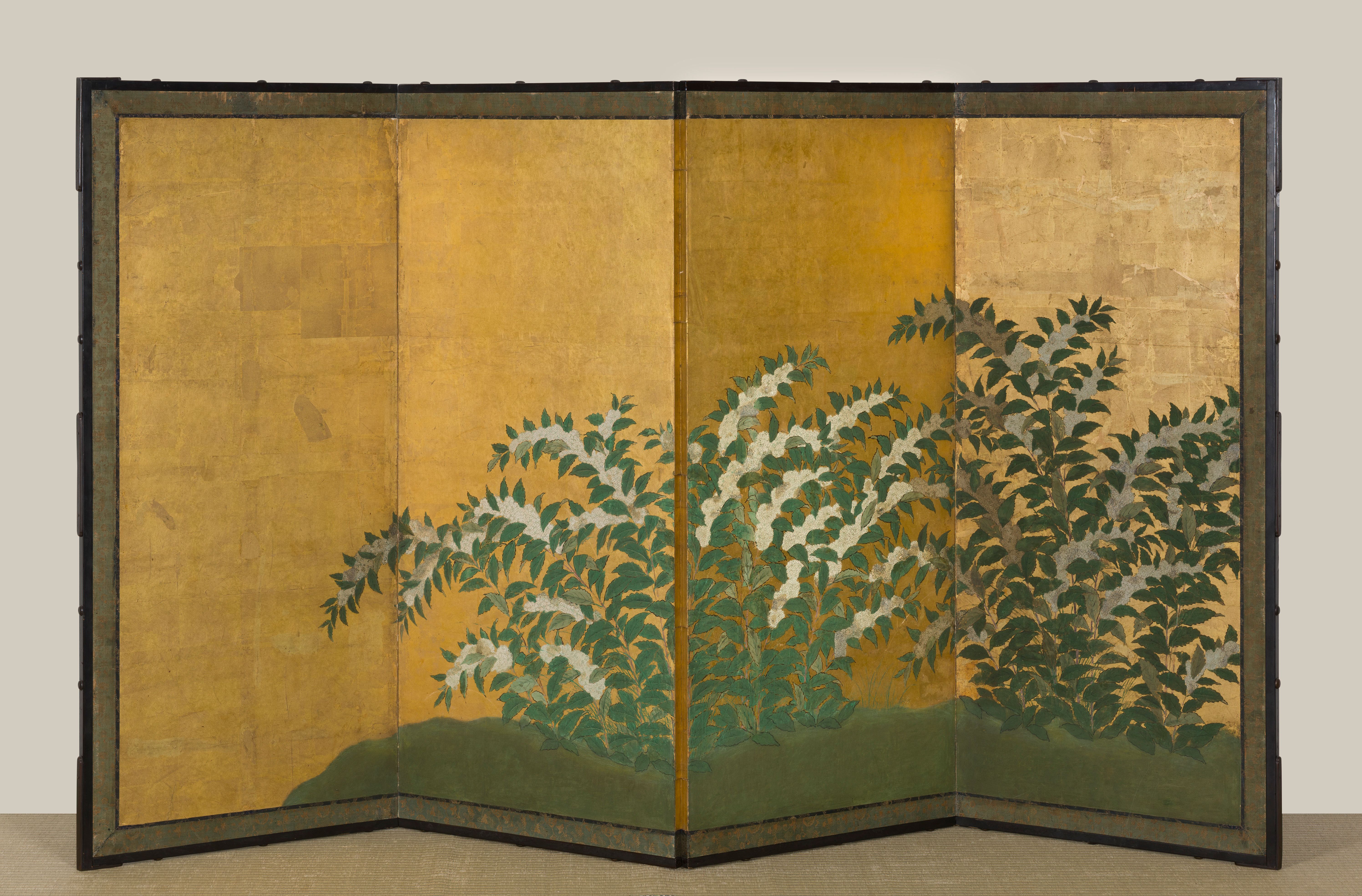
A pair of four-fold screens painted in ink and colour on a gold ground with kuri (Japanese chestnut) flowers on a knoll.
Japan, 17th/18th century, Edo period.
Provenance: a private Italian collection.
Chestnut (kuri). The Japanese for dried chestnut is kachiguri which shares the sound of the word for victory, kachi, and had special meaning for warriors of the feudal period. Associated with the ceremonies of troops departing for battle and returning home in triumph, it was ultimately adopted as an auspicious mon (family crest).
Screens


An eight-fold screen depicting flowers of the four seasons


A two-fold lacquer screen carved with an abstract geometric design


A six-fold paper screen with poem slips


A pair of six-fold screens depicting ‘One Hundred Boys'


A pair of six-fold screens depicting the maritime routes of the Seto Inland Sea and of the north of Kyushu Island


Tanomura Chokunyu - screen painted in ink on a silver ground with a rock, bamboo and calligraphy


A two-fold lacquer screen with an abstract landscape


A four-fold screen with calligraphy “Hishō" (Fly High)


A pair of six-fold paper with sweetfish


A pair of six-fold screens with clematis


A six-fold screen with a covey of uzura and chicks


A six-fold screen with grape vines


A two-fold screen with chrysanthemums


A pair of six-fold paper screens with the Plains at Musashino

A pair of four-fold screens with kuri flowers


A pair of six-fold screens with scattered fans


Four fusuma by Nagasawa Rosetsu


A six-fold screen with autumn flowers and grasses


A paper screen with the Uji river and its bridge


A two-fold screen with a river landscape


A two-fold screen with court ladies


A pair of six-fold screens with poem slips from the 17th century


A two-fold screen with the Uji River and its bridge


A six-fold paper screen with the Plains at Musashino

A screen with abstract calligraphy “Garden”


Triptych screen by Suda Kokuta


A two-fold lacquer screen with a persimmon tree


A two-fold batik silk folding screen


A lacquer screen by Onaga Tamotsu

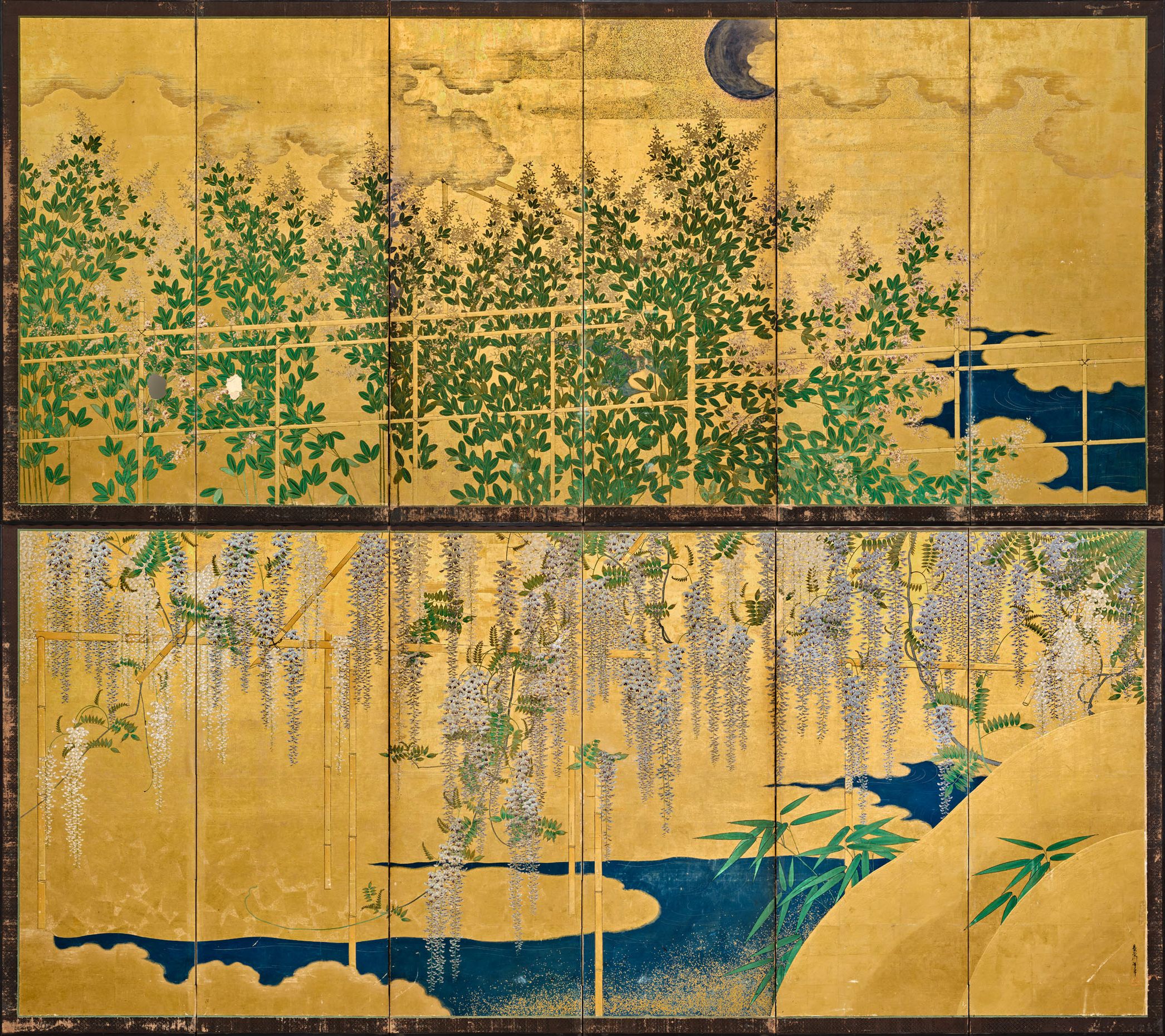
A pair of six-fold screens with wisteria and bush clover by Hasegawa Tōji