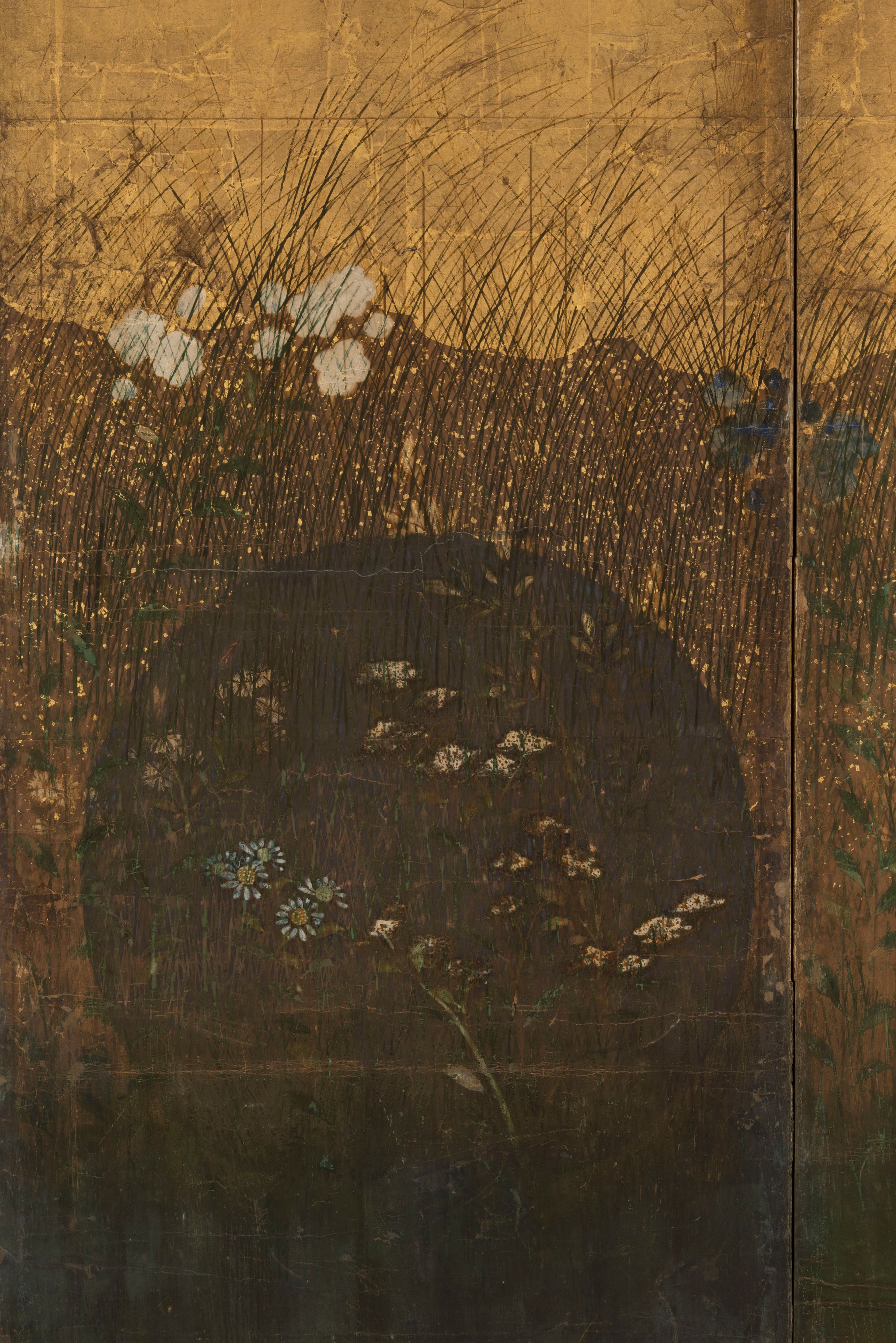
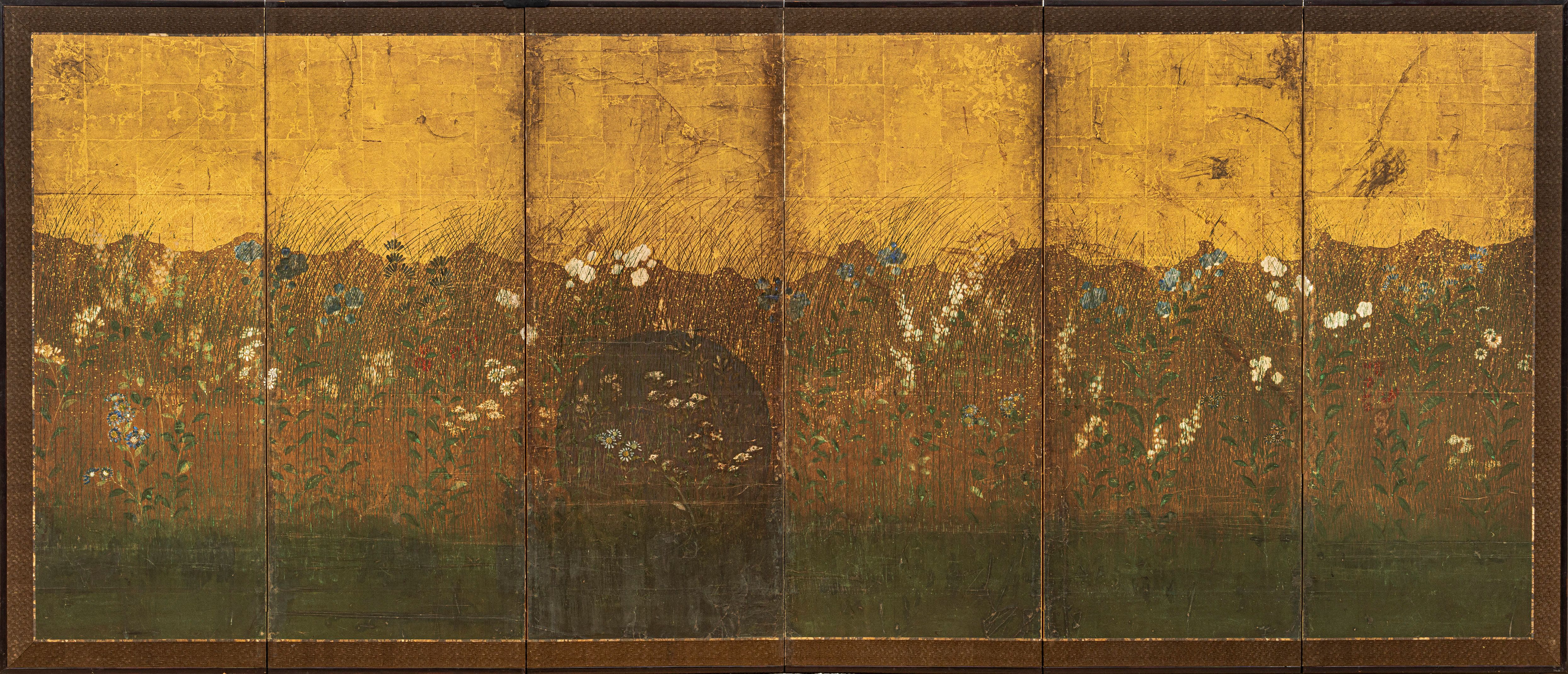
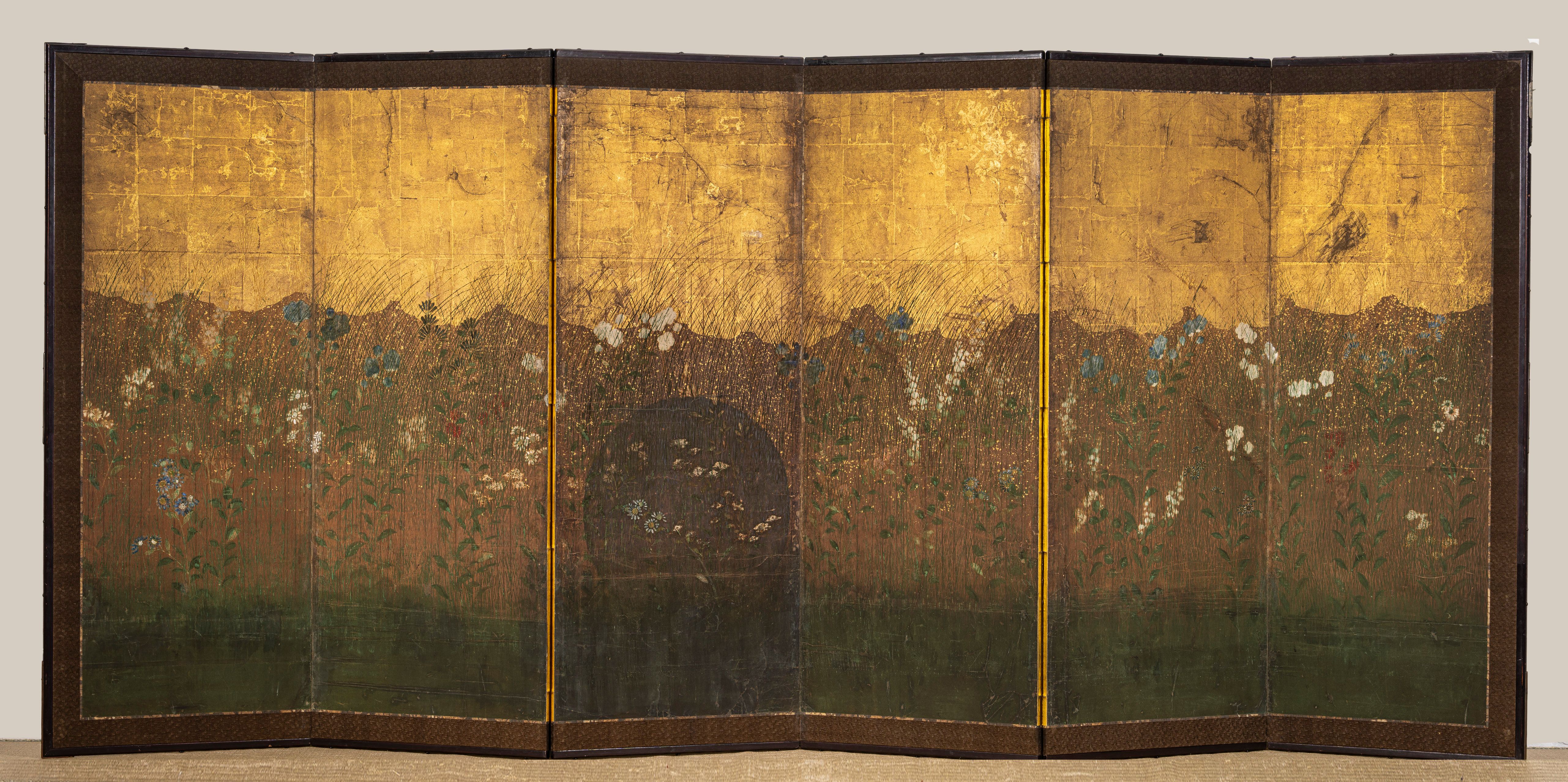
A six-fold paper screen painted in ink and colour on a gold ground with the scene of the Plains at Musashino where the silver moon is rising amongst hagi (bush clover), kikyō (bellflower), nogiku (asteroideae), nadeshiko (fringed pinks) and other autumnal grasses.
Japan, 17th century, Edo period.
In the realm of meisho-e (pictures of famous scenic places), the portrayal of a large full moon or sun viewed through autumnal grasses represents Musashino (the Musashi plain).
The plain of Musashi was a large flat expanse of land west of Edo, most famous for the illusion of the moon rising straight out of the grasses and similarly the sun appeared at its largest size and deepest shade of red just before setting into the horizon.
A poem celebrating this famous landscape was written by the aristocrat Minamoto Michikata (1189–1238) and is included as no.425 in the imperial poetry anthology of c.1265, the Shokukokin Wakashu (Collection of Ancient and Modern Poems Continued).
Musashino wa
tsuki no irubeki
mine mo nashi
obana ga sue ni
kakaru shirakumo
On the Musashi plain
there is no peak
for the moon to enter
white clouds catch in
the tips of the flowers.
This famous location also appears in Chapter 12 of the 10th century novel Ise Monogatari (Tales of Ise) where a young couple elope and hide amongst the tall grasses of Musashino. When their pursuers threaten to set fire on the grasses the lady pleads for mercy with the waka poem that reads:
Musashino wa
kyō wa na yaki so
Wakakusa no
tsuma mo komoeri
ware mo komoeri
Oh no, please, today
do not burn the Musashi Plain!
Tender as young grass,
my beloved is hiding here,
and I too am hiding here.
During the Edo period Musashino was frequented by picnickers inspired by its haunting beauty, poetic references and spectacular views of Mount Fuji. After the recent era of industrialisation Musashi lost its original landscape and is currently an area located in the centre of the metropolis of Tokyo.
For other examples of this subject matter in the collection of the Chicago Art Museum see: Japanese Design in Art vol.12 p.32-33, pl.25 and another pair in the collection of the Nezu Museum see: Catalogue of Selective Masterpieces from the Nezu Collections, Painting and Calligraphy, p. 162-163, pl. 138. Also for a further pair of six-fold screens in the collection of Fujita Museum see: Nihon Byōbue Shūsei, vol.9: Shiki Keibutsu (Natural Features of Four Seasons), p. 84-87, no.70-75, 77-78, 80.
Screens


An eight-fold screen depicting flowers of the four seasons


A two-fold lacquer screen carved with an abstract geometric design


A six-fold paper screen with poem slips


A pair of six-fold screens depicting ‘One Hundred Boys'


A pair of six-fold screens depicting the maritime routes of the Seto Inland Sea and of the north of Kyushu Island


Tanomura Chokunyu - screen painted in ink on a silver ground with a rock, bamboo and calligraphy


A two-fold lacquer screen with an abstract landscape


A four-fold screen with calligraphy “Hishō" (Fly High)


A pair of six-fold screens with clematis


A six-fold screen with a covey of uzura and chicks


A six-fold screen with grape vines


A two-fold screen with chrysanthemums


A pair of six-fold paper screens with the Plains at Musashino


A pair of four-fold screens with kuri flowers


A pair of six-fold screens with scattered fans


Four fusuma by Nagasawa Rosetsu


A six-fold screen with autumn flowers and grasses


A paper screen with the Uji river and its bridge


A two-fold screen with a river landscape


A two-fold screen with court ladies


A pair of six-fold screens with poem slips from the 17th century


A two-fold screen with the Uji River and its bridge

A six-fold paper screen with the Plains at Musashino

A screen with abstract calligraphy “Garden”


Triptych screen by Suda Kokuta


A two-fold lacquer screen with a persimmon tree


A two-fold batik silk folding screen


A lacquer screen by Onaga Tamotsu


A pair of six-fold paper with sweetfish depicting summer, the revers side with pumpkins and a praying mantis depicting autumn