
Logo

Brussels

www.japanesescreens.com

info@japanesescreens.com

Classical Art

Screens

A pair of six-fold screens with wisteria and bush clover by Hasegawa Tōji

#7859

Hasegawa Tōji

Hasegawa school

H. 166cm x W. 372cm (65¼” x 146½”) each

Under 10.000€

Under 50.000€

Under 100.000€

Over 100.000€

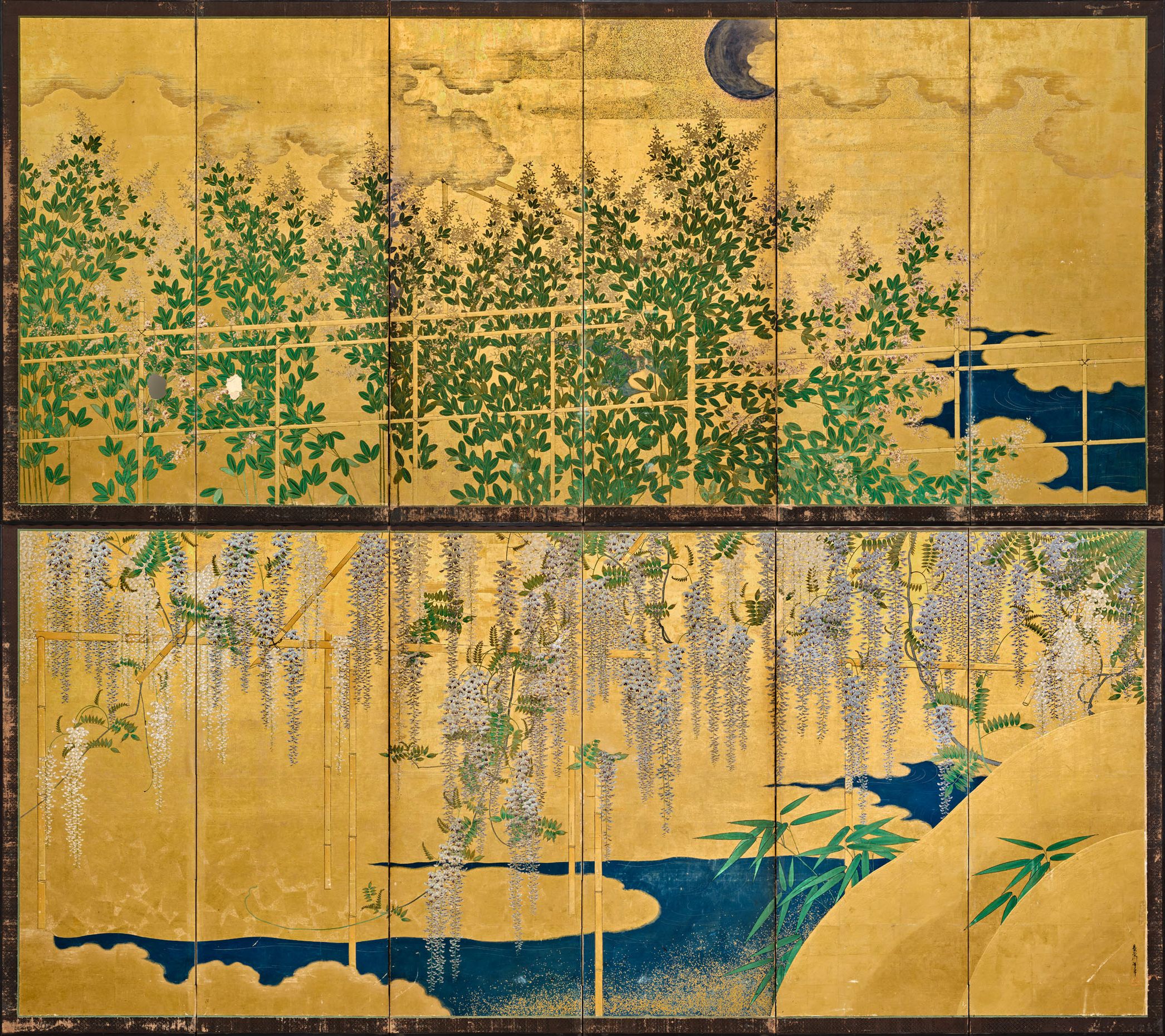
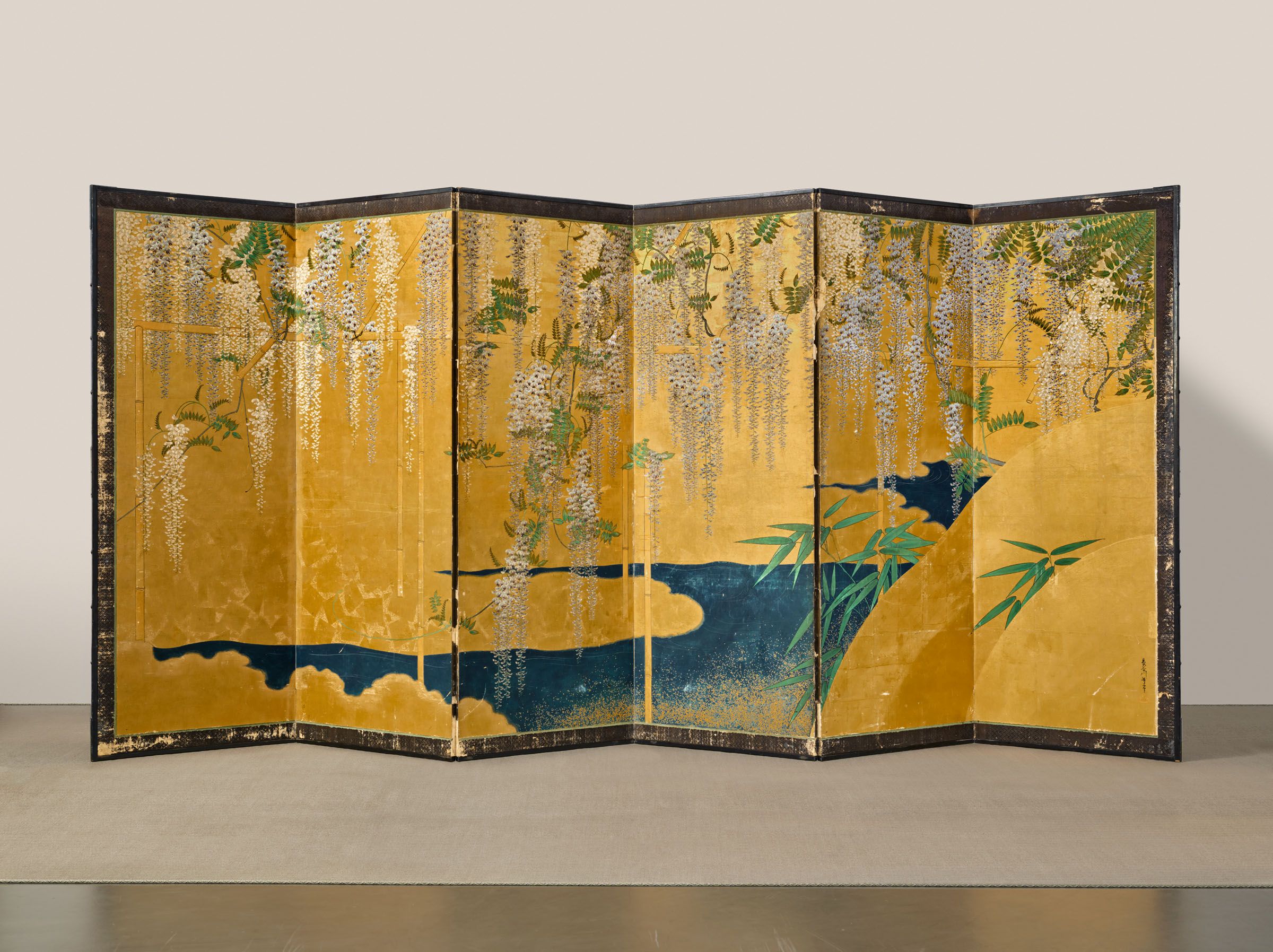
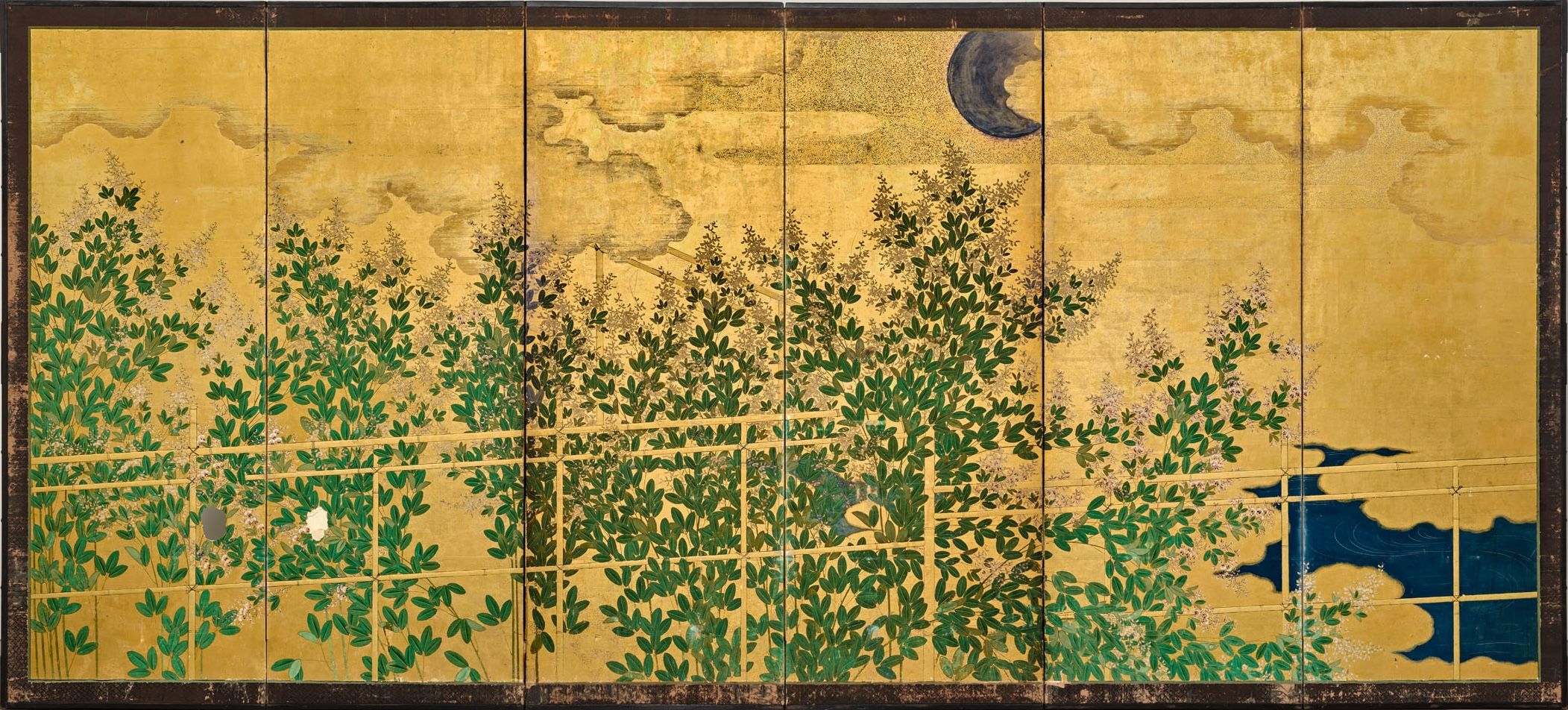
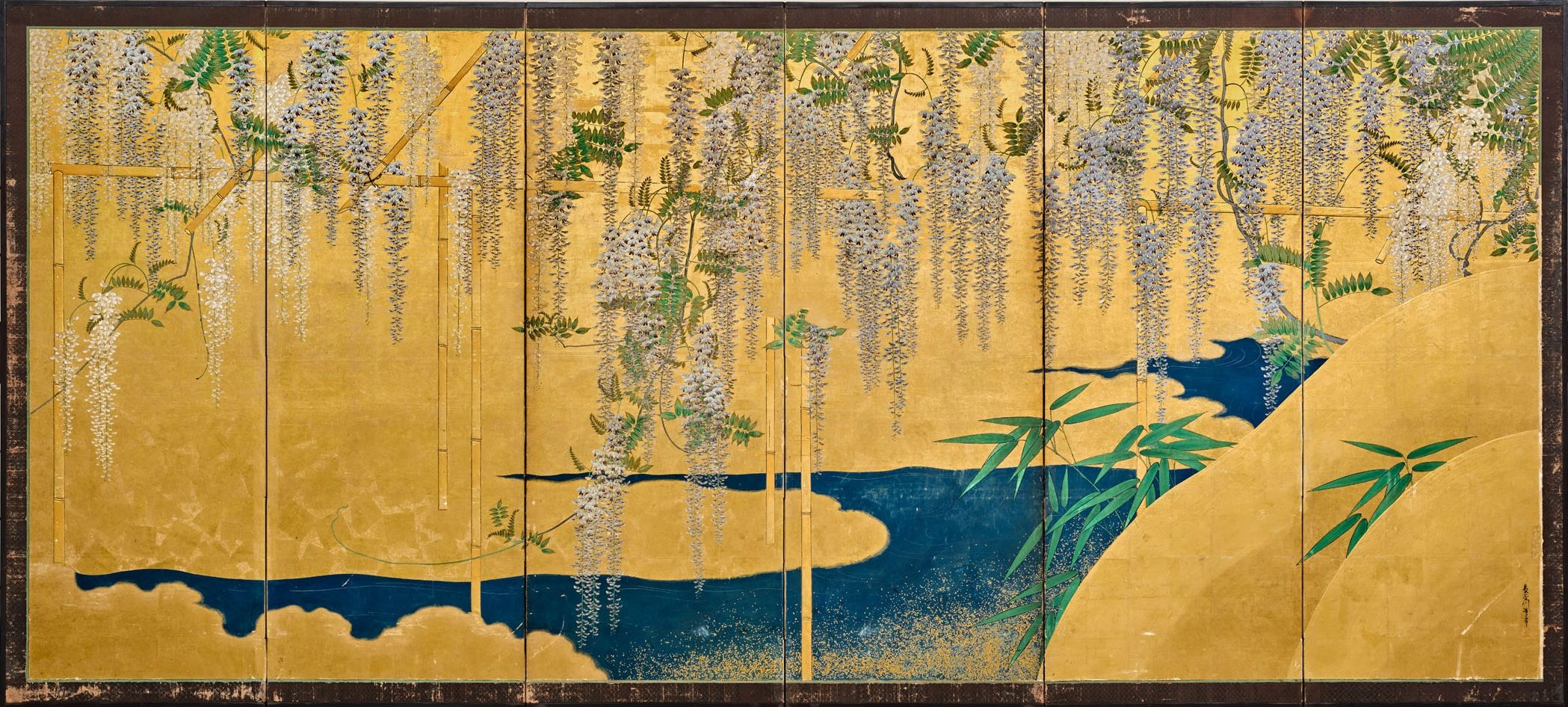
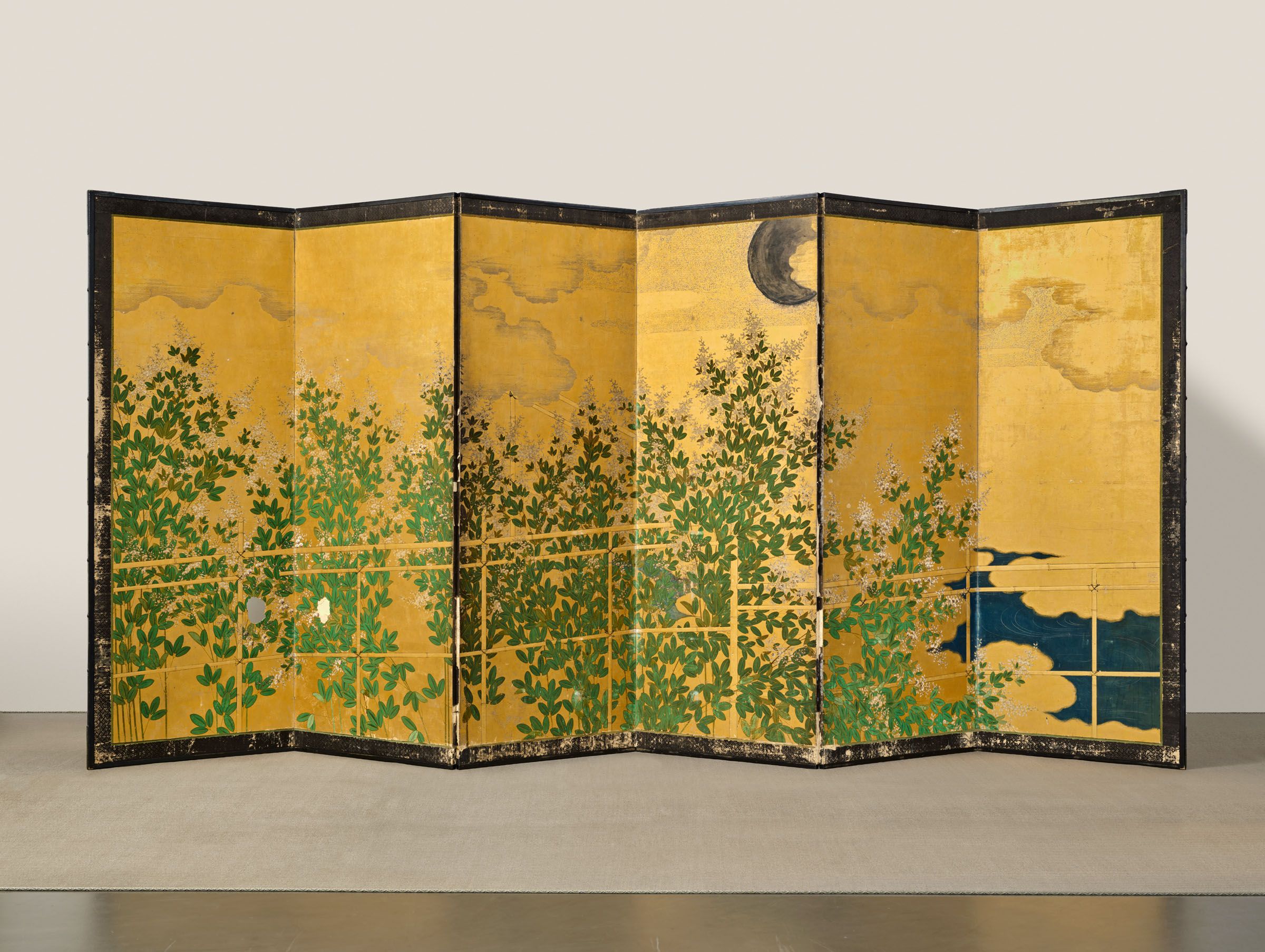
A pair of six-fold paper screens by Hasegawa Tōji (active in the first half of the 17th century) painted in ink and colour on a gold ground.

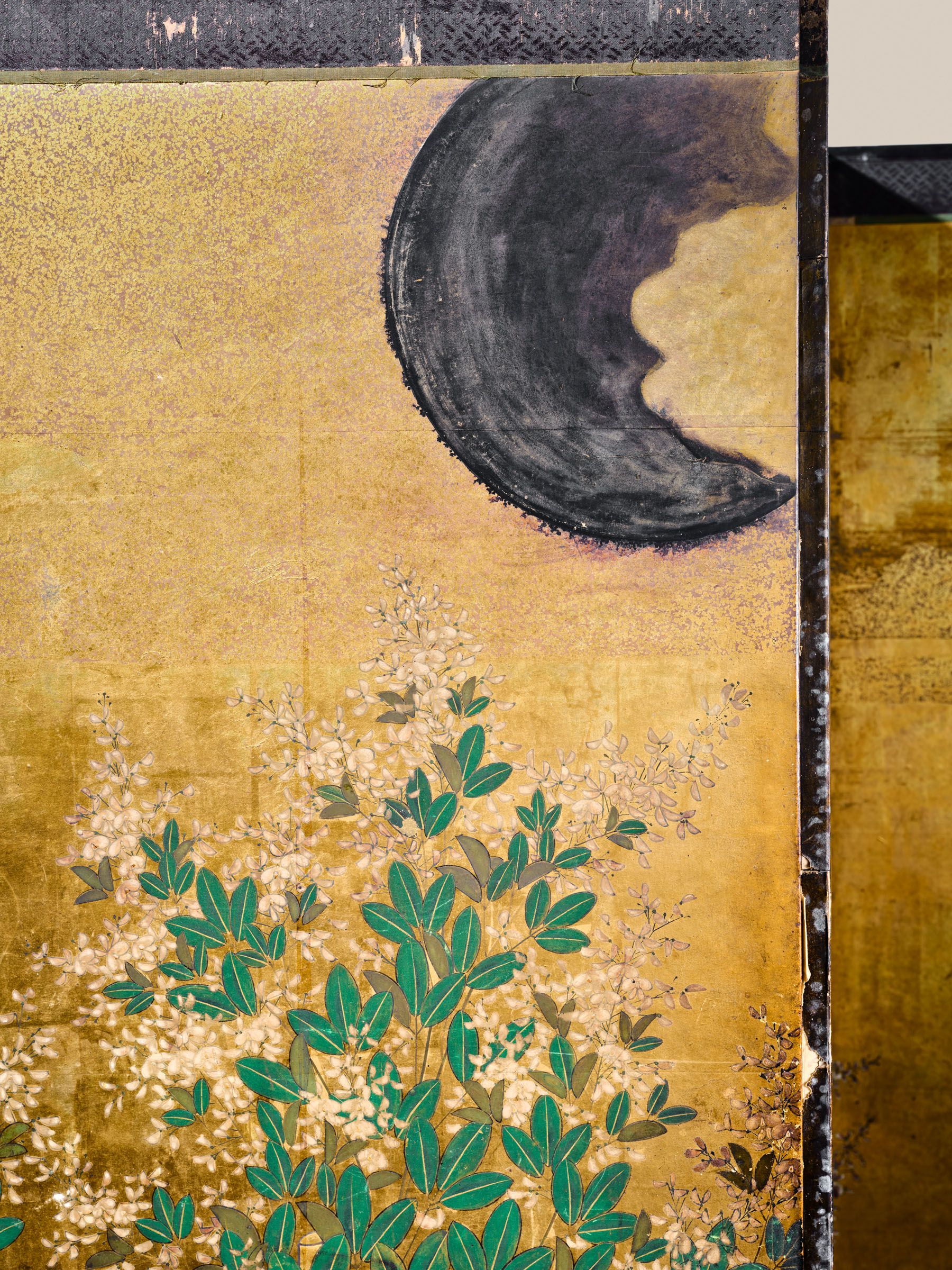
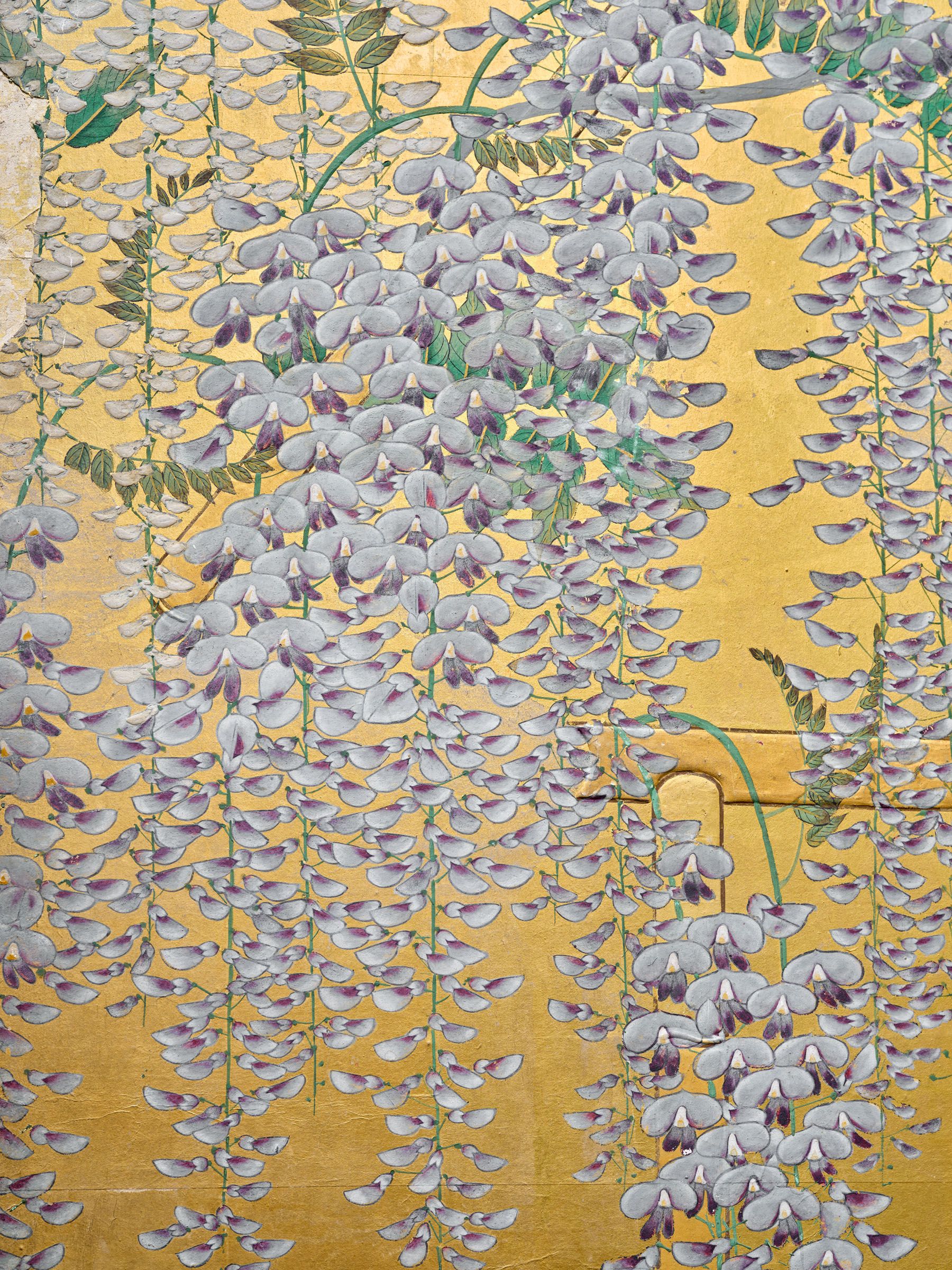
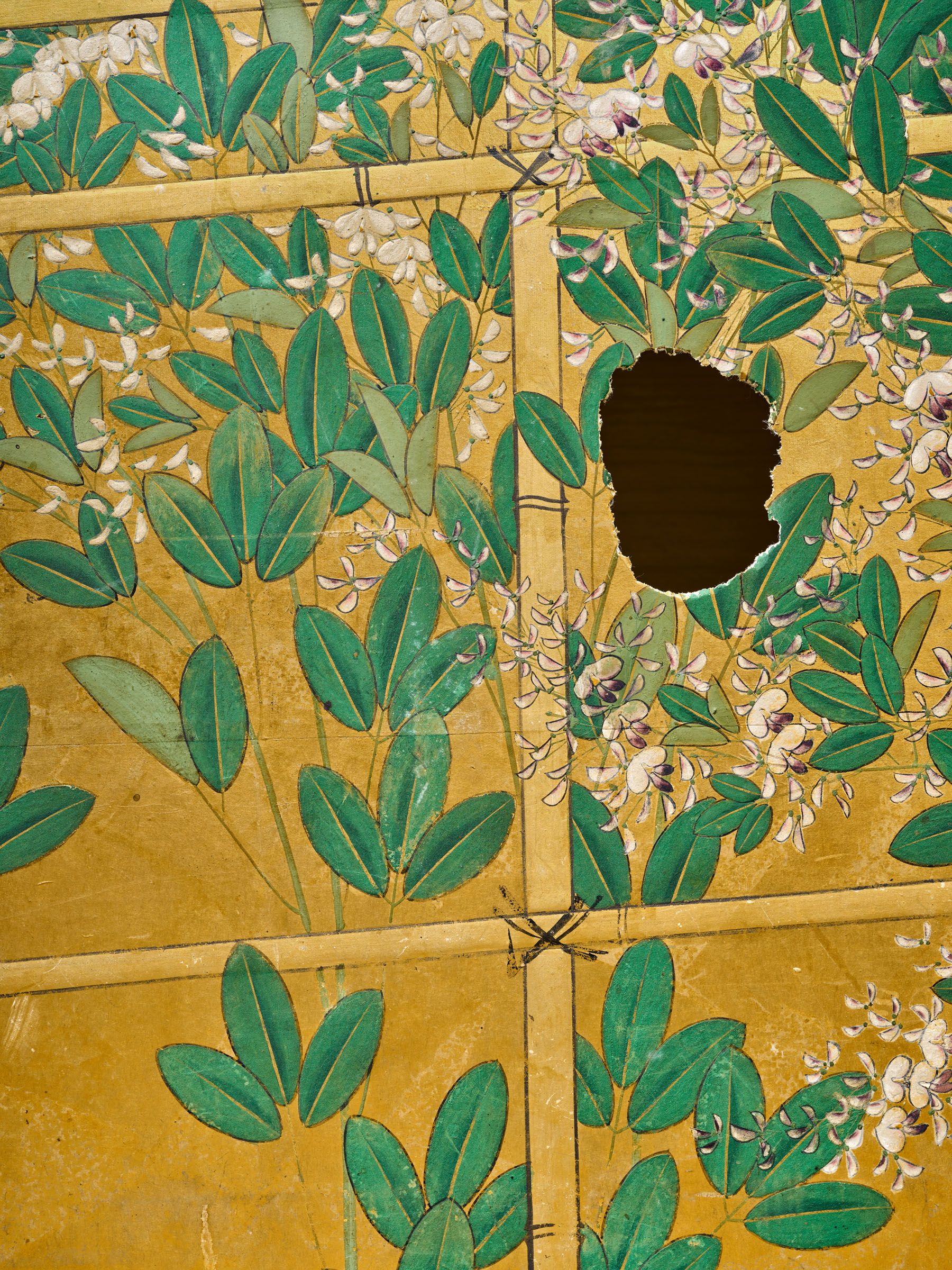
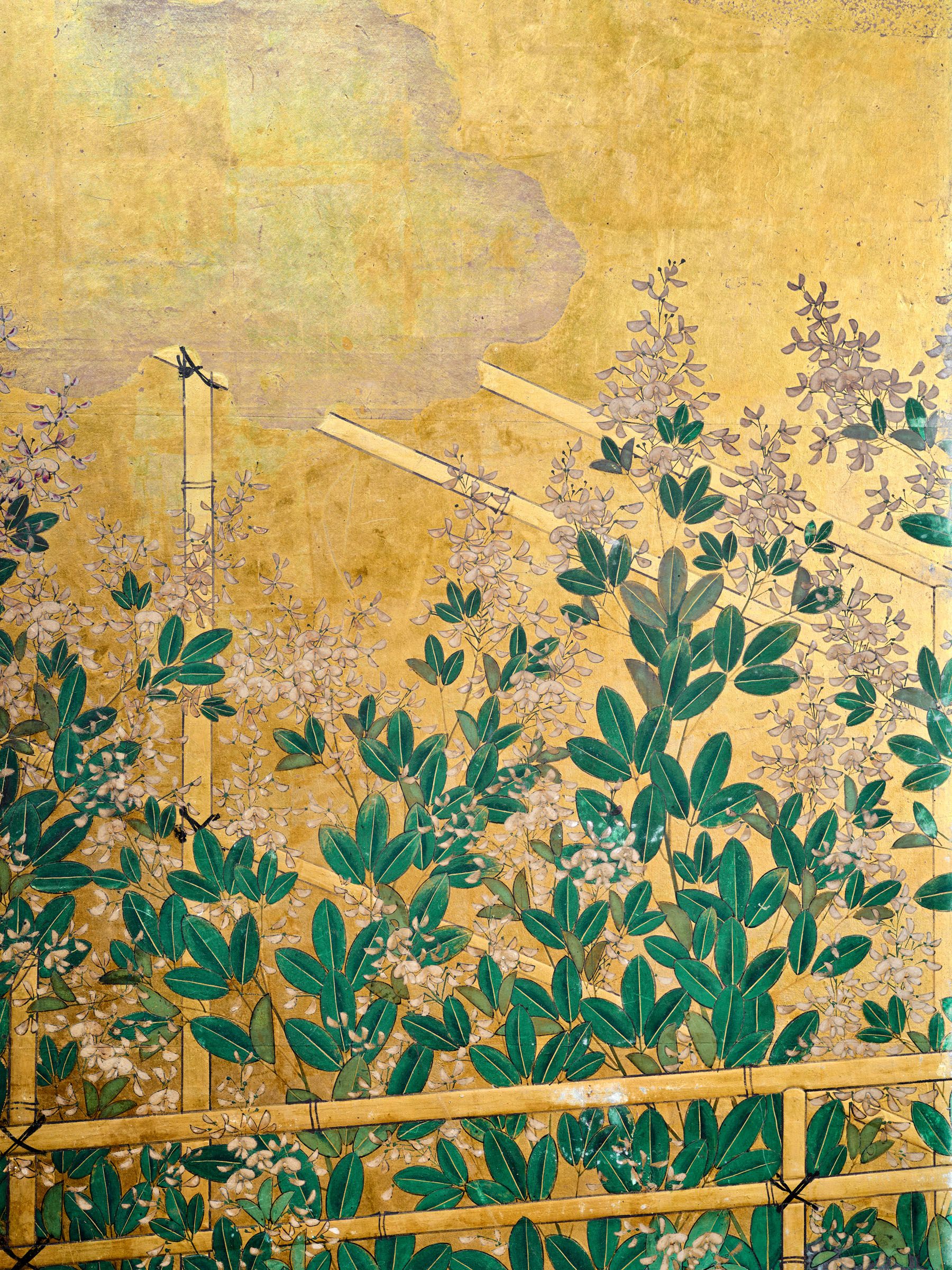
The right-hand screen depicts fuji (wisteria) in full bloom on a bamboo trellis beside a riverbank; the left-hand screen depicts blossoming hagi (bush clover) behind a bamboo fence beneath a silver moon, all amongst golden clouds.

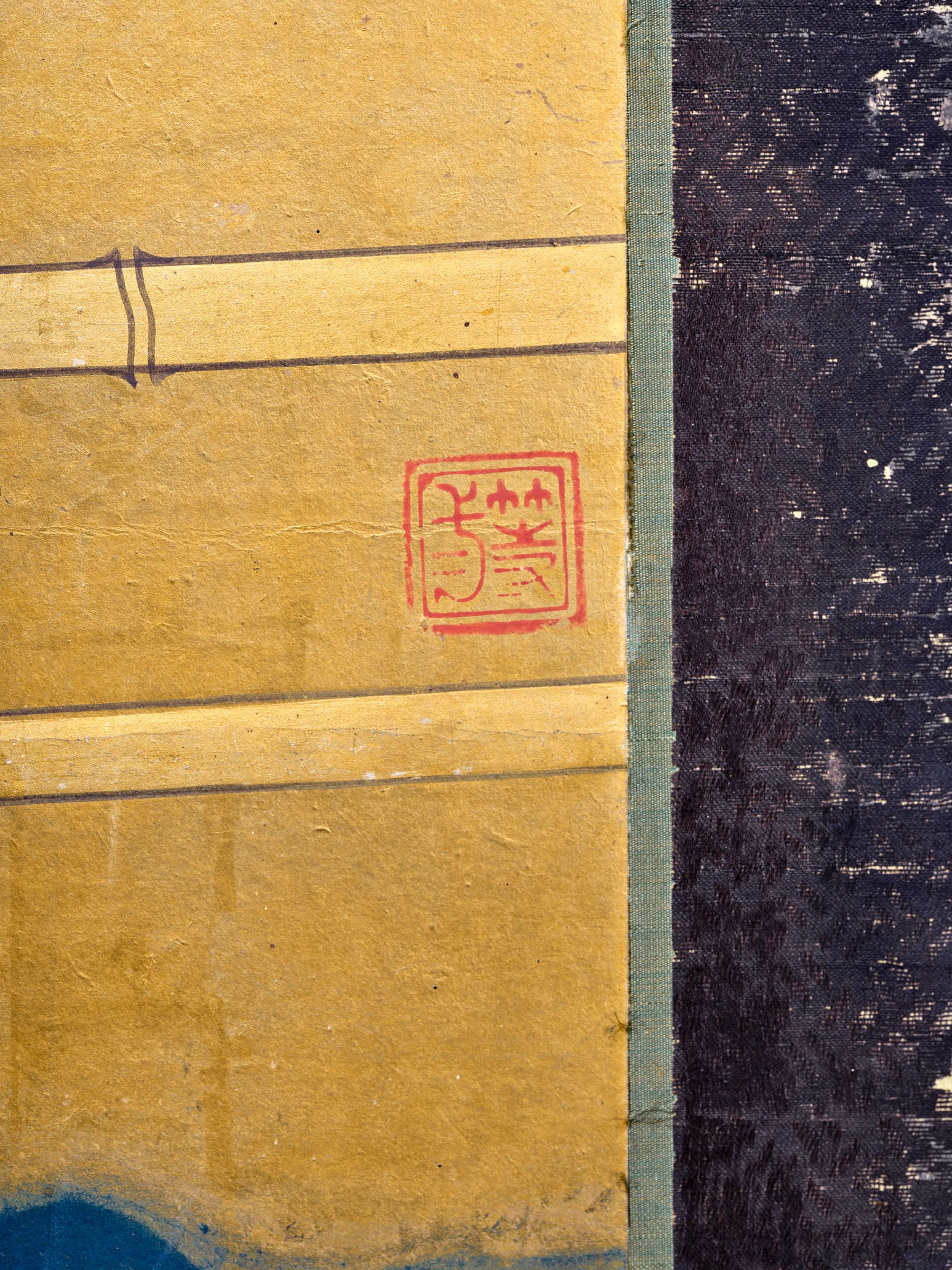
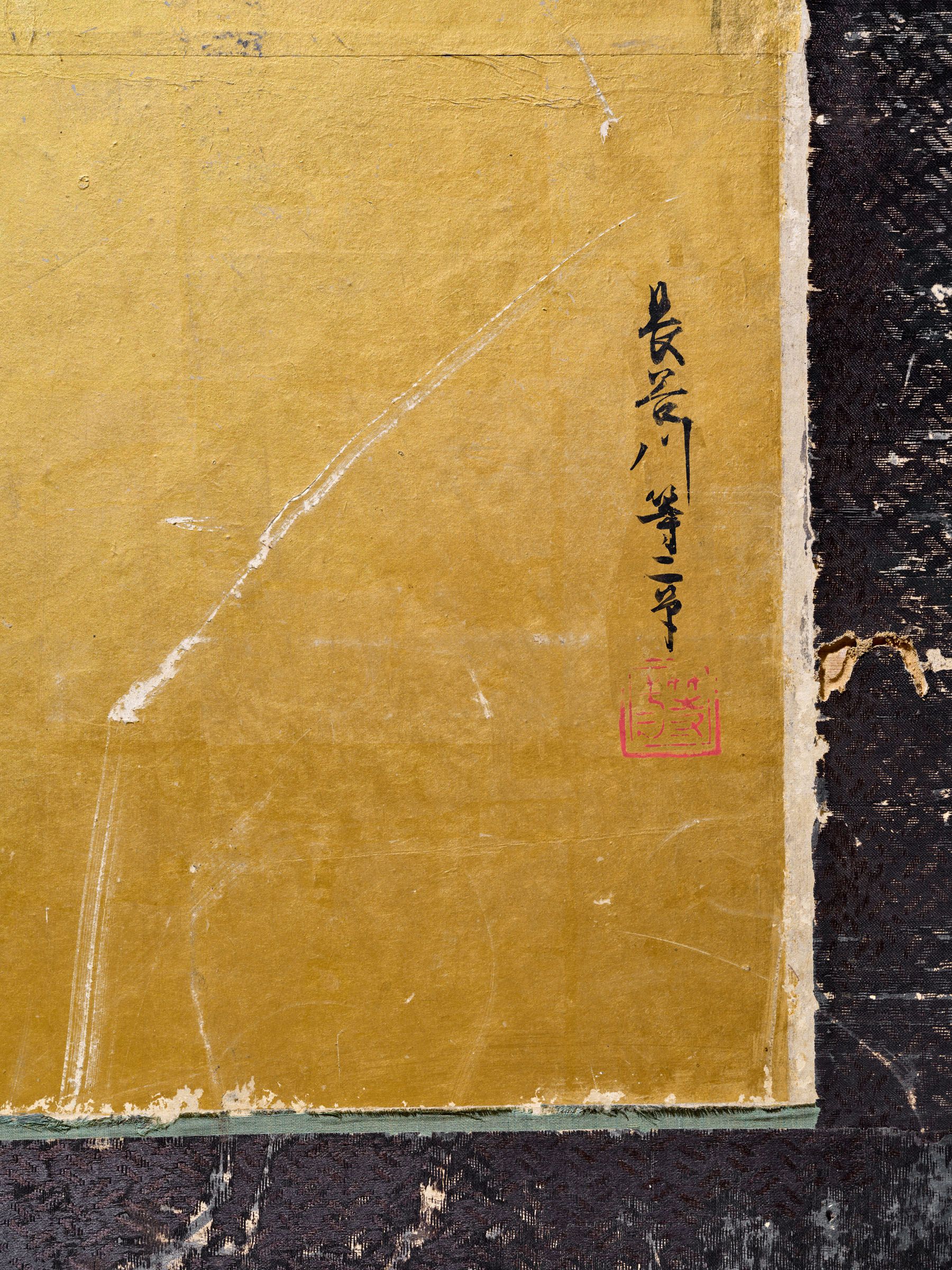
Signed: Hasegawa Tōji hitsu (brushed by Hasegawa Tōji) on a right screen and sealed Tōji on both screens.

Japan, early 17th century, Momoyama-Edo period.

RCD test result: "7859_145790A Paper Screen C14 report"

The Hasegawa School was founded by Hasegawa Tōhaku (1539–1610) in the late 16th century. Despite being small, consisting mostly of Tōhaku, his sons, sons-in-law and a few known pupils, it is known today as one of the most influential artistic groups of the period. Its members conserved Tōhaku's quiet and refined aesthetic, which many attribute to the influence of Sesshū Tōyō (1420–1506) as well as his friend and contemporary, the tea master, Sen no Rikyū (1522–1591). Initially influenced by the predominantly monochrome ink paintings of Sesshū, the Hasegawa School also produced opulent and dynamic paintings decorated with rich colours and gold leaf, which became popular with the new ruling military class and decorated the interiors of their castles and temples.

Tōhaku's most noted contemporary, Kanō Eitoku (1543–1590), often competed with him for the patronage of one of the main unifiers of Japan, the daimyō Toyotomi Hideyoshi (1536–1598). Following Eitoku's death in 1590, Tōhaku stood alone as the greatest living master of his time. Chosen by Hideyoshi, the Hasegawa School gained power and popularity, enabling the production of some of the finest and most admired paintings of the period.

Despite the fame of the school, very little is known about the artist of this newly discovered pair of screens, Hasegawa Tōji, who appears to have been a highly accomplished member of the Hasegawa School. The only other known work by Tōji is a pair of screens Bamboo and Wisteria, previously in the private collection of the politician and lawyer Mr Kiyoomi Taman (1892–1979), now housed in the Osaka City Museum of Fine Arts. This pair depicts bamboo in ink wash on a gold ground; amongst the bamboo are wisteria flowers in colour with wildflowers such as dandelions, violets and epiphytic ferns on the ground. The subdued tone and effective use of blank space in the Osaka screens may present a somewhat different aesthetic to the current pair, which celebrate an abundance of flowers in vibrant hues. However, the delicate and graceful rendering of the wisteria flowers in both pairs clearly indicates they were created by the same hand. Additionally, as with the present pair, the right-hand screen of the Osaka pair is signed Hasegawa Tōji hitsu (brushed by Hasegawa Tōji) and sealed Tōji, while the left screen bears the Tōji seal.

Since no other works by Tōji nor written records about him are known, this has remained an area of limited scholarly discussion so far. In the 1949 edition of the Kokka journal, the eminent art historian Yamane Yūzō affirmed that the artist Hasegawa Tōji belonged to the Hasegawa School and dated the Osaka pair to the first half of the 17th century. In the catalogue entry for the 2017-2018 exhibition of Japanese screens at Uffizi Galleries in Florence, the curator, having analysed the painting style, writes that Tōji was one of Tōhaku's pupils despite the lack of written records. A recent conservation project at the Osaka City Museum of Fine Arts uncovered old account books within the frames of the Bamboo and Wisteria screens, further confirming their production during the early-modern period.

As for the painting motifs, the present pair follow the tradition of Japanese art in which motifs of two contrasting seasons, spring and autumn, are often featured as a pair. Consistent with this custom, the right-hand screen illustrates wisteria, a symbol of spring, whereas the left-hand screen features bush clover, a symbol of autumn.

Wisteria flowers, which bloom in late spring, have long been celebrated in Japan. They have appeared in poetry, paintings, and decorative arts as early as the Nara (710–794) and Heian (794–1185) periods. Particularly during the Heian period, as the Fujiwara clan flourished, wisteria (fuji) came to be regarded as a symbol of nobility and prosperity. Aristocratic women adorned their hair with wisteria, and the plant was incorporated into family crests, reinforcing its association with refinement and elegance. In The Pillow Book (c.1002) by the court lady and author Sei Shōnagon (c. 966–c.1025), wisteria is described as one of the 'things that are exquisite', praised for the beauty of its gracefully cascading clusters of flowers and rich, elegant colour. Furthermore, the plant's vine-like growth, entwining and extending over time, has come to symbolise enduring connections and lasting prosperity. Wisteria, with its delicate yet dignified presence, has been admired and cherished by many throughout history.

Bush clover (hagi), one of aki no nanakusa (seven grasses of autumn), is a long-standing symbol of autumn in Japan. Among the 160 plants mentioned in the Manyōshū (Collection of Ten Thousand Leaves), the earliest known anthology of Japanese poetry (comprising poems from the early 7th to mid 8th centuries), bush clover is the most frequently referred to, appearing in 141 poems. Its prominence in poetry surpasses even that of the plum and cherry blossoms, reflecting its deep connection to Japanese culture and literature. In The Pillow Book, Sei Shōnagon captures the beauty of bush clover with the following passage 'The flowers of the grasses... the hagi, with its deeply coloured branches, gracefully blooming, drenched in morning dew, its tender stems gently sprawling outward…'. Not only featured in literature, bush clover has also been depicted in numerous paintings and decorative arts, continuing to hold significant cultural and aesthetic presence in Japanese art. It may be also noteworthy that Japan is home to the greatest variety of hagi species in the world. Together with a full moon, which also symbolises the autumn, this screen quintessentially represents the beauty of this season.

In this pair, not only are the subjects—spring and autumn—juxtaposed, but the composition also creates a cleverly striking contrast between the two. On the right screen, the wisteria flowers elegantly cascade vertically from the upper part of the screen, with the right and central parts depicted in a dense, richly layered manner, while the flowers on the left part become sparser. Together with the vertically rendered bamboo trellis, the wisteria screen highlights the refined, vertical rhythms of the composition. In contrast, on the left screen, the vibrant bush clover blooms vigorously from the lower part, with the flowers on the left and central parts especially densely depicted. The slightly angled bamboo fence accentuates the horizontal expansion of the scene. Through these contrasting compositions, the artist seems to represent two differing aesthetics: tranquil elegance on the right screen and vibrant vitality on the left. Together, this pair offers the viewer a refined yet dynamic visual experience.

Screens

An eight-fold screen depicting flowers of the four seasons

A two-fold lacquer screen carved with an abstract geometric design

A six-fold paper screen with poem slips

A pair of six-fold screens depicting ‘One Hundred Boys'

A pair of six-fold screens depicting the maritime routes of the Seto Inland Sea and of the north of Kyushu Island

Tanomura Chokunyu - screen painted in ink on a silver ground with a rock, bamboo and calligraphy

A two-fold lacquer screen with an abstract landscape

A four-fold screen with calligraphy “Hishō" (Fly High)

A pair of six-fold paper with sweetfish

A pair of six-fold screens with clematis

A six-fold screen with a covey of uzura and chicks

A six-fold screen with grape vines

A two-fold screen with chrysanthemums

A pair of six-fold paper screens with the Plains at Musashino

A pair of four-fold screens with kuri flowers

A pair of six-fold screens with scattered fans

Four fusuma by Nagasawa Rosetsu

A six-fold screen with autumn flowers and grasses

A paper screen with the Uji river and its bridge

A two-fold screen with a river landscape

A two-fold screen with court ladies

A pair of six-fold screens with poem slips from the 17th century

A two-fold screen with the Uji River and its bridge

A six-fold paper screen with the Plains at Musashino

A screen with abstract calligraphy “Garden”

Triptych screen by Suda Kokuta

A two-fold lacquer screen with a persimmon tree

A two-fold batik silk folding screen

A lacquer screen by Onaga Tamotsu

A pair of six-fold screens with wisteria and bush clover by Hasegawa Tōji

Subscribe to our newsletter